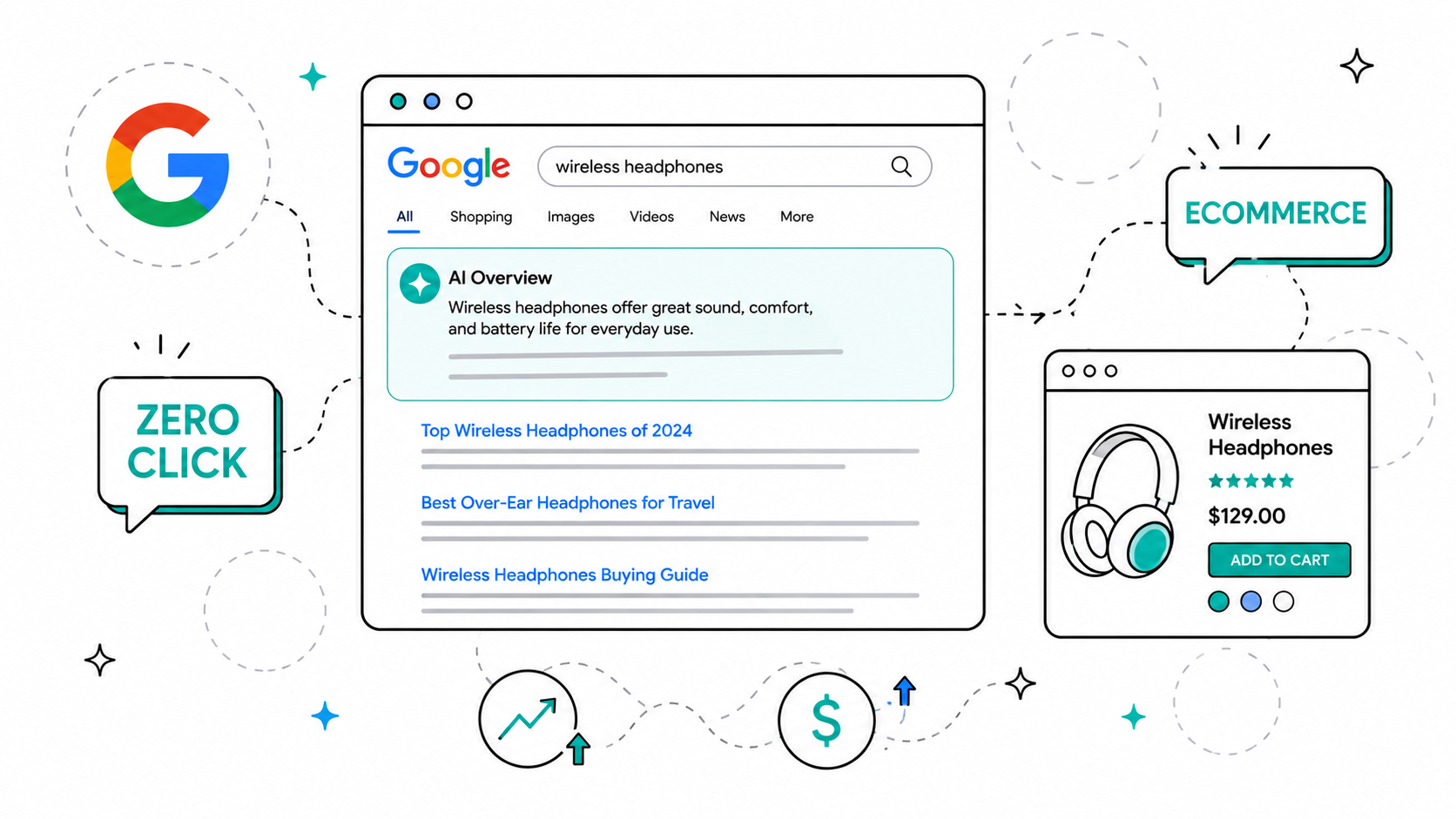
Depending on the study you read last year and even some floating around on social media so far, somewhere between 25%-80% of Google searches now end without anyone clicking on anything. Now, some of that data is based on searches that contain AI Overviews. Some of the data is overall, but one thing remains the same: The majority of people searching on Google find what they need without ever visiting a website.

Source: Datos State of Search Q4 2025
If you’re still reporting SEO success primarily through rankings (I can’t believe people still do this), organic traffic and click through rates, you’re measuring maybe half the picture. And the half you’re missing might be the more valuable half.
I’ve been watching this shift accelerate over the years. AI Overviews is the new trend but before that we had featured snippets, knowledge panels, People Also Ask boxes, local packs. Google has gotten very good at answering questions directly on the search engine results page (SERP). For users, this is often great.
I love it when I need to check a quick score on a game, stats for a player, Zoe Saldana’s height (don’t judge me), etc.
For marketers trying to prove SEO value to stakeholders, it’s not so great, and, it creates a real measurement problem.
The Numbers Behind Zero Click Search
Let’s look at what’s actually happening. According to SEMRush/Datos 2025 study, zero-click searches in the US increased to 27% of US searches end entirely within Google’s search results page. Mobile users are even less likely to click, with about a 30% gap between mobile and desktop click behavior.
The trend has been accelerating. In January 2025, AI Overviews appeared for about 6.5% of queries, but by March 2025, that had more than doubled to over 13%. Multiple analysts predict we’re heading toward 70% zero click rates by mid 2026.
When AI Overviews do appear, the zero click rate jumps to around 80%. Eight out of ten users get their answer directly inside the search interface.
Some people might say this is Google being evil, but the truth is, it’s Google being useful. When someone searches “weather Los Angeles” or “15 USD to EUR” or “when is the next leap year,” they want an answer, not a list of websites to visit.
This is all about Search User Experience and the search results page has become the destination rather than a gateway.
Why Traditional SEO Metrics Are Telling an Incomplete Story
Most SEO reporting still centers on organic traffic, keyword rankings, and click through rates. These metrics made sense when the goal was getting people to click through to your website. Of course, the top KPI that SEO professionals are reporting on is traffic, according to a 2025 Hubspot Website Marketing Survey

But if 60% of searches never result in a click, and your content is still appearing and influencing those searchers, your traffic reports are systematically undervaluing your SEO investment.
Think about what happens when your brand appears in a featured snippet or AI Overview. Someone sees your company name, maybe reads information sourced from your content, and forms an impression. That’s brand exposure. That has value. But it doesn’t show up in your Google Analytics.
I’ve talked with marketing teams who’ve seen their organic traffic decline year over year while their rankings stayed stable or even improved. That’s the zero click reality. The rankings are working. People are seeing the content. They’re just not clicking because Google is giving them what they need on the SERP itself.
A Framework for Measuring What Actually Matters
Before diving into specific metrics, let’s be clear about something: revenue, ROI, and your core business KPIs are still the North Star. That hasn’t changed. What’s changed is that the path from SEO work to those outcomes is no longer as simple as rankings → traffic → conversions.
When large amounts of searches don’t result in clicks, you need visibility metrics to understand whether your SEO is actually working even when the traffic numbers don’t show it. I call these “directional SEO metrics.”
These metrics help you diagnose what’s happening and make better optimization decisions. They are not a replacement for business outcomes.
The right measurement approach depends on your business model. An e-commerce company selling products directly needs to connect SEO to revenue differently than a B2B company with a six month sales cycle. A local service business cares about phone calls and appointments. A media company might care about ad impressions and subscriber growth.
Whatever your North Star metric is, visibility data helps you understand the relationship between your SEO efforts and those outcomes when traditional traffic metrics tell an incomplete story.
Impressions as a Diagnostic Tool
Google Search Console gives you impression data for free. When impressions are growing but clicks stay flat, that tells you people are seeing your content in SERP features where clicks are rare. That’s not a failure. It’s information about where your visibility is happening.
The question then becomes: is visibility contributing to your business goals? If branded search volume and direct traffic are also increasing, you have evidence that SERP visibility is building awareness that converts elsewhere. If those stay flat, you might need to adjust your strategy.
Branded Search Volume
Branded Search to me is a metric that I feel is really underutilized, to this day. It bridges visibility and intent. I love Branded Search because we use it to show brand growth, we have so much data and correlation between Meta Ads traffic driving discovery for brands, but it doesn’t end there.
When someone sees your brand in a featured snippet or AI Overview and later searches for you directly, that’s a signal they’ve moved from awareness to consideration. That has business value you can connect to your funnel.
Track branded search volume through Google Trends, Google Search Console, and even your paid search brand campaign data, especially conversions. Establish a baseline before major SEO initiatives and look for correlation between visibility gains and branded search growth. The pattern I’ve seen is typically 15-20% branded search lifts within a couple weeks of major visibility improvements.
More importantly, track what happens after the branded search. Are those visitors converting? Signing up? Requesting demos? The branded search lift only matters if it connects to outcomes, but, if someone is looking for you, the intent is high and there should be high conversion rates.
SERP Feature Presence
Track which SERP features you’re appearing in AI Overviews, Featured Snippers, Local Packs. Tools like Semrush and Ahrefs can show you SERP feature ownership.
This data helps you understand where your content is showing up and how that aligns with user intent at different stages of the buyer journey. Winning a featured snippet for an informational query builds awareness. Appearing in local packs for transactional queries drives action. The value depends entirely on how that visibility connects to what you’re trying to accomplish.
Share of Voice in AI Responses
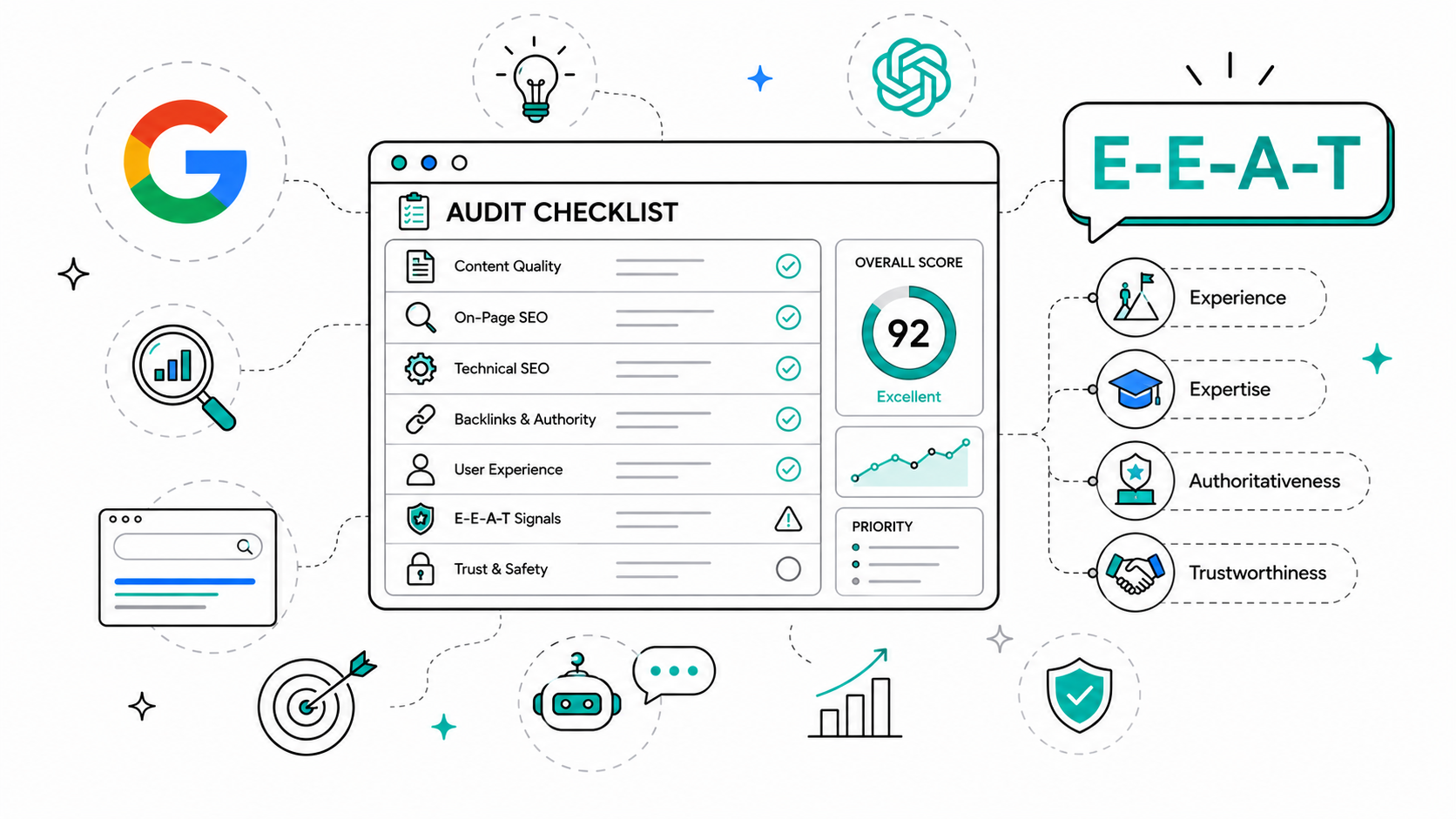
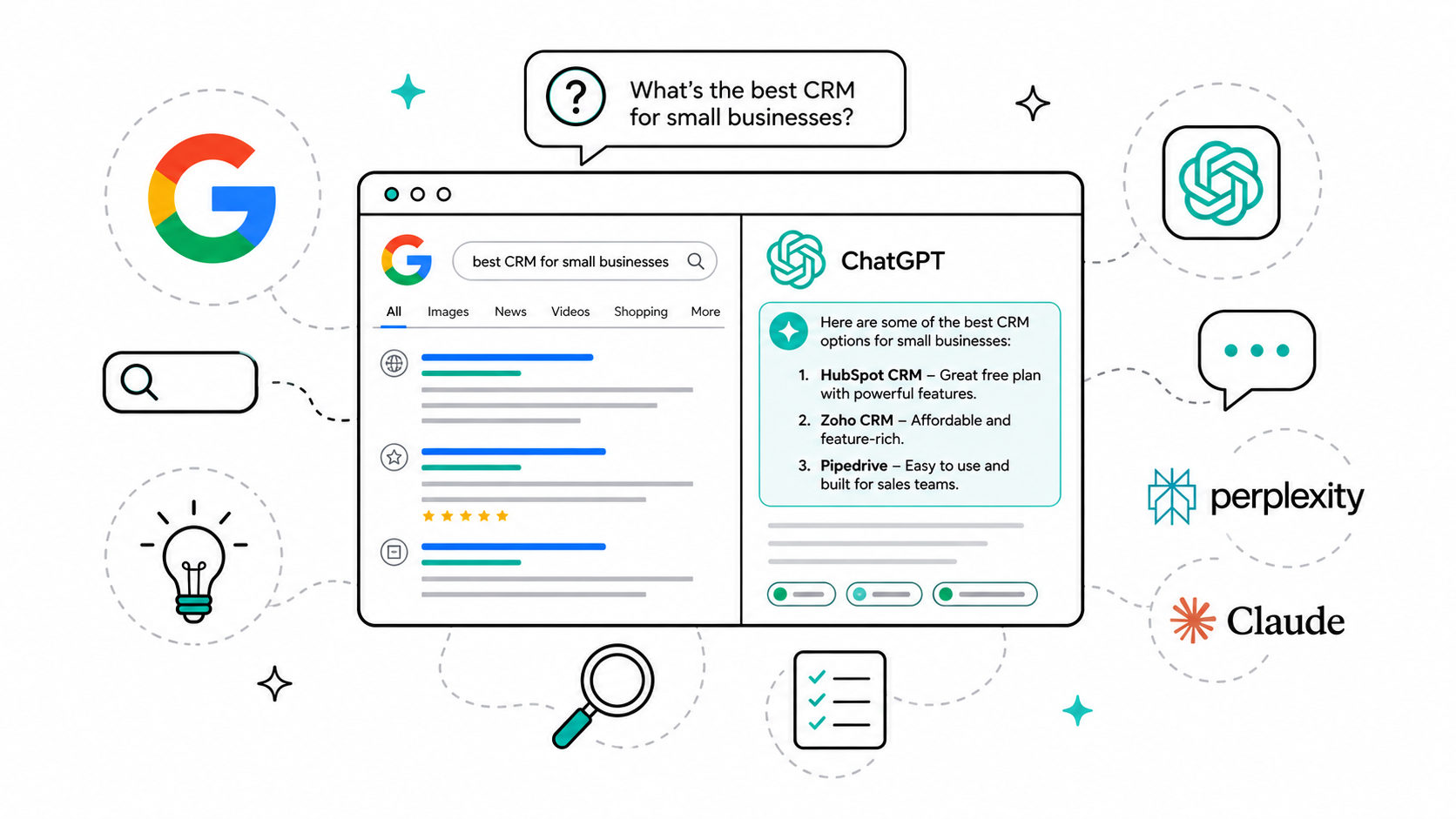
When ChatGPT, Perplexity, or Google’s AI Overview answers a question in your space, is your brand being cited? Several tools are emerging to track AI citations, and some SEO platforms are adding this capability.
The interesting thing about AI referral traffic is that while the volume is still small compared to traditional organic, the conversion rates are significantly higher. Users who arrive from an AI citation tend to be more qualified because the AI has already filtered for relevance. That’s a business outcome worth tracking even if the absolute numbers are small.
Connecting It Back to What Matters
None of these visibility metrics matter in isolation. The goal is to build a measurement framework that shows the relationship between SEO and actual business objectives.
If you’re seeing strong visibility metrics but no movement in revenue or your core KPIs, that’s a signal to investigate. Maybe you’re visible for the wrong queries. Maybe there’s a disconnect in the conversion path. Maybe the awareness you’re building hasn’t had time to translate to action yet.
The visibility data gives you the information to diagnose and adjust. The business outcomes tell you whether it’s working.
Making the Case to Stakeholders
The hardest part of this shift isn’t the measurement itself. It’s explaining to executives and stakeholders why the metrics they’ve been watching for years no longer tell the whole story.
Here’s how I approach that conversation:
Start with the macro trend. Show them the zero-click data. Make it clear this is an industry wide shift, not something specific to your company or your SEO team’s performance.
Then connect visibility to brand value. If someone sees your brand name in search results, that’s awareness. Billboard companies have been selling that value for decades, the fact it’s happening digitally doesn’t make it less valuable.
Show the branded search correlation. This is the most concrete proof point. If branded search volume increases following SEO improvements, it’s obvious the SEO work being done is generating awareness even when it’s not generating clicks.
And, of course, don’t abandon traditional metrics entirely. Clicks and conversions from organic search still matter as much as they used to, but now there is a bigger story to tell and the above is part of that framing.
What This Means for Your SEO Strategy
The measurement shift also has implications for how you approach SEO tactically. None of this is new advice, but important to think about it in context with zero-click search.
- Optimize for SERP features intentionally. Structure content to answer questions directly. Use clear headings that mirror user queries. Implement schema markup to help search engines understand your content.
- Think about brand visibility as an outcome. When you create content that appears in featured snippets or AI Overviews, make sure your brand name is associated with said content. The goal isn’t just to appear; it’s to build awareness and recognition for the brand.
- Diversify your discovery channels. If 60% of searches don’t result in clicks, that means search is increasingly a brand awareness channel rather than a traffic acquisition channel. Make sure you have other pathways to capture that demand, whether that’s paid search campaigns on brand terms, email list building, or presence on other platforms.
The Bottom Line
Zero-click search isn’t a crisis. It’s just another change in our SEO reality that requires an updated approach to measurement, and our overall thinking. You might be generating more value than your metrics currently suggest, you just need to start measuring, framing, and telling that story correctly.
The brands that figure this out first will have a significant advantage. They’ll be able to justify continued SEO investment while competitors mistakenly conclude that organic search isn’t working anymore. And they will be positioned to capture value from AI search as those platforms continue to grow.
If your organic traffic is down but your rankings and impressions are stable, don’t assume your SEO is failing. You might just be measuring the wrong things.
If you’re struggling to connect your SEO efforts to business results or need help building a measurement framework that accounts for the zero-click reality, we can help you figure that out. Reach out to Visible Factors for a conversation about what’s actually happening with your organic search performance.
About the Author: Tony Adam