Most businesses know they need SEO. Fewer actually understand what it is.
What is SEO? SEO stands for search engine optimization. In plain english, it is the practice of making your website show up in organic, non-paid search results. The goal is simply to show up when people search for topics, services, or products directly relevant to your business.
However, SEO isn’t a single tactic you can check off a list. It’s an entire practice of technical, content, and authority signals that work together to tell search engines your site deserves to be shown. This guide covers how seo actually works as a system, including practices that separate high ranking businesses from everyone else.
Why SEO Matters for Your Business
Organic search accounts for roughly 53% of all website traffic, making it the single largest traffic channel for most businesses. That alone should make it a priority. But the more compelling case is that unlike paid ads, which stop working the moment you stop spending, SEO traffic compounds over time. This means that a page that earns a top ranking today can keep driving qualified visitors for years.
The top result on Google captures approximately 27.6% of all clicks, and fewer than 1% of users ever venture to page two. If you are not on page one, you are largely invisible to people who are actively looking for what you offer.
For context, Google processes an estimated 8.5 billion searches per day, and maintains over 90% of the global search engine market share. As you can see, the potential for organic search is absolutely huge.
How Search Engines Work
Before you can optimize for search engines, you need to understand what they are actually doing. Every major search engine runs three core operations: crawling, indexing, and ranking.
Crawling is how search engines discover content. Automated programs called crawlers follow links from page to page, collecting information about what each page contains. If your site has broken links, blocked pages, or poor infrastructure, crawlers may never reach your content.
Indexing is what happens after a page is crawled. The search engine analyzes all the information it just gathered and actually learns what the page is about and how it relates to other content. Not every crawled page gets indexed. Thin content, duplicate pages, and pages with a noindex tag are excluded. Getting properly indexed is the baseline before anything else in SEO matters.
Ranking is where your content surfaces. When someone searches, the algorithm sorts through billions of indexed pages in milliseconds and surfaces what it believes are the most relevant and trustworthy results. Before the era of AI, rankings were determined through what keywords you ranked for. Now, ranking depends more on the intent behind a search and user context. That shift is what makes SEO today so different from SEO a decade ago.
What Are the Core Ranking Algorithm Components?
Google does not publish its ranking formula, but years of research, testing, and Google’s own documentation have made the major components reasonably clear.
Relevance is foundational. How well does your content match what someone is searching for? Does your page address the intent behind the query, not just the keywords on the surface? A page written to genuinely answer a question will consistently outperform one that just mentions the right words.
Authority in 2026 comes from topical depth more than backlinks. When you show E-E-A-T (experience, expertise, authority, trust) in your content, it signals to Google that your site is reliable and credible. Pages that comprehensively cover a subject and address related questions tend to outperform those that skim the surface, even if the surface-level page uses all the right keywords.
User experience has grown significantly in weight, particularly after Google’s Core Web Vitals update. Page speed, mobile responsiveness, and visual stability now factor into rankings. An e-commerce site that loads under one second converts at 2.5 times the rate of one that loads under five seconds, and Google’s algorithm has taken notice.
What Is SEO Marketing and How Does It Fit Into Your Strategy?
SEO marketing is the application of SEO within a broader marketing strategy. It is about reaching people at the right moment in their decision process and delivering the right content to meet them there.
Someone searching “what is a content strategy” is early in a research phase. Someone searching “content strategy agency Los Angeles” is close to making a decision. What is seo marketing, done well, combines content and optimization work to every stage of that journey so your brand is present and credible throughout.
Strong SEO strategies treat content as a connected system rather than a pile of individual posts. Each piece should serve a purpose within a topic cluster, link to related content, and build toward broader topical authority overtime.
The Four Types of SEO
SEO gets broken down into four main categories, and all of them need to work together.
On-page SEO covers everything on your actual pages: the content itself, headings, meta titles, meta descriptions, internal links, and HTML structure. The goal is making each page clearly relevant to a target topic, both for human readers and for search engine crawlers.
Technical SEO is about your site’s infrastructure. Crawlability, indexability, page speed, mobile usability, structured data, canonical tags, and site architecture all fall here. If the technical foundation is shaky, everything built on top of it is compromised.
Off-page SEO covers signals from outside your website, mainly backlinks. When authoritative, relevant sites link to your content, it builds your domain’s credibility in the algorithm’s eyes.
Local SEO helps businesses with physical locations or geographic service areas. It targets location-based searches and involves Google Business Profile optimization, local citations, and location-specific content. For local searches, 42% of users click on results within the Google Maps Pack, which means local SEO is a priority for any business serving a specific region.
What Is E-E-A-T and Why Does It Matter for Rankings?
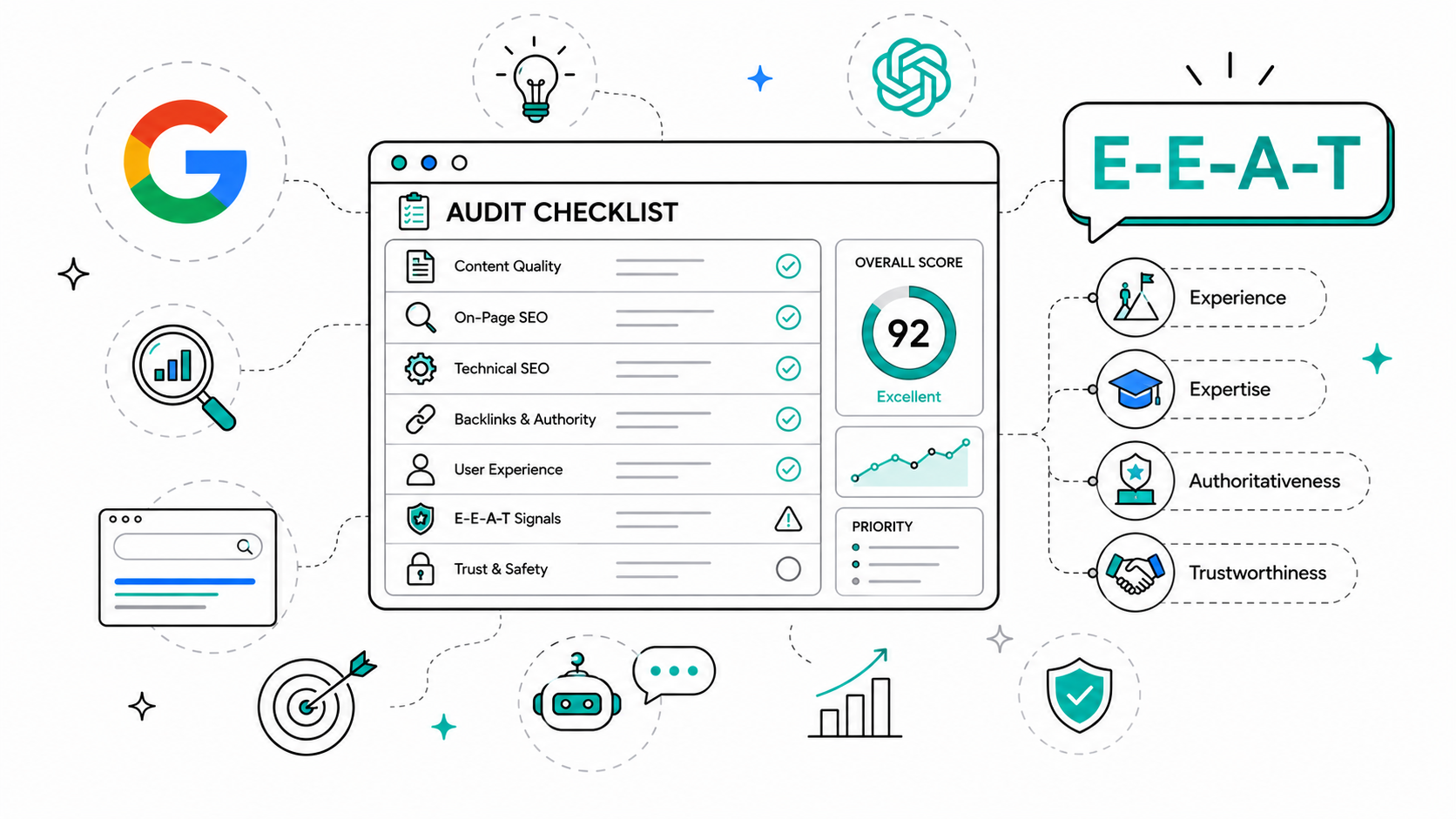
E-E-A-T is an essential part of SEO content marketing and stands for Experience, Expertise, Authority, and Trustworthiness. It comes directly from Google’s Search Quality Rater Guidelines and describes the signals Google uses when evaluating whether content deserves to rank.
Experience is first-hand knowledge, or lived experiences. Content written by someone who has actually done the thing they are describing carries more weight than content assembled purely from secondary research.
Expertise is specific industry knowledge. For example, a marketing piece written by someone with years in the field, a medical article from a physician, a legal explainer from a practicing attorney, these signal expertise in ways generic content cannot.
Authority means reputation. We’re talking about backlinks, citations, and the depth of your topical coverage all contribute to how authoritative your domain appears to Google.
Trustworthiness is probably the most important. Accurate information, transparent authorship, and honest representation of your products or services all point to trustworthiness. Without these, the rest of your E-E-A-T signals mean little.
When you include E-E-A-T in your content, you’re putting in real author bios with genuine credentials, sharing examples and case studies from your own work, and building pages that clearly explains who you are and why you are qualified to speak on your topic.
Entity-Based SEO: Why Keywords Are Only Part of the Story
Search in 2026 is entity-based, not just keyword-based. An entity is any real-world thing with a distinct, identifiable existence: a person, a company, a place, a concept. Google’s Knowledge Graph maps the relationships between these entities, so when Google processes your content, it is recognizing entities and understanding how they connect, not just scanning for keyword matches.
For your content strategy, consistent naming matters more than most people realize. This is because when search engines (especially LLMs) find what to pull up for users, it relies on consistency. For example, our company name is “Visible Factors,” which means that every mention, author attribution, and schema markup should use that name consistently. Inconsistency creates ambiguity which erodes trust (and impacts E-E-A-T signals).
Topical coverage also builds entity authority. A site that thoroughly covers SEO from multiple angles like technical SEO, content strategy, link building, analytics, etc. is more likely to be recognized as an authority on that subject than a site with scattered, individual posts. This is why a topic cluster strategy works: a pillar page supported by related content, all internally linked, signals genuine depth to both search engines and readers.
Semantic Search Optimization: Writing for Meaning, Not Just Matches
Semantic search optimization is the practice of structuring content to match the meaning behind a query, not just the exact keywords. Google has the ability to understand context, synonyms, and relationships between ideas. A page about “improving organic rankings” can rank for “what is SEO” if it is thorough enough, even without that exact phrase repeated throughout.
Writing for semantic search means covering the full scope of a topic, using natural language variation, and addressing related concepts. “Search engine optimization,” “organic search,” “SEO marketing,” “ranking in Google” all reinforce the same topical area without forcing a keyword. Structure your content around questions your readers actually ask, because that is how people search, and question-based headings give AI systems and search engines a clear signal about what each section answers.
SEO and AI Search: What’s Changing and What Stays the Same
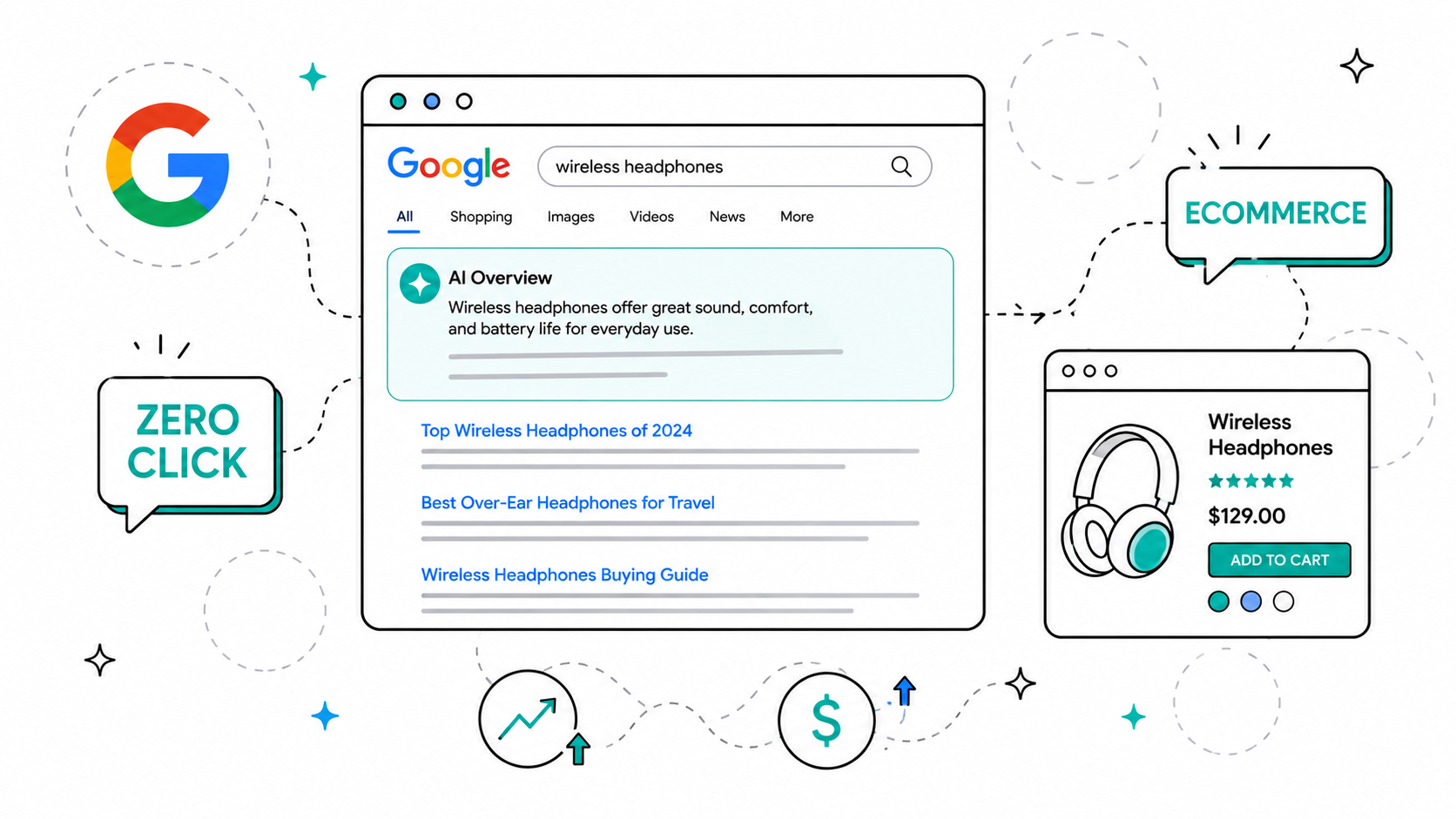
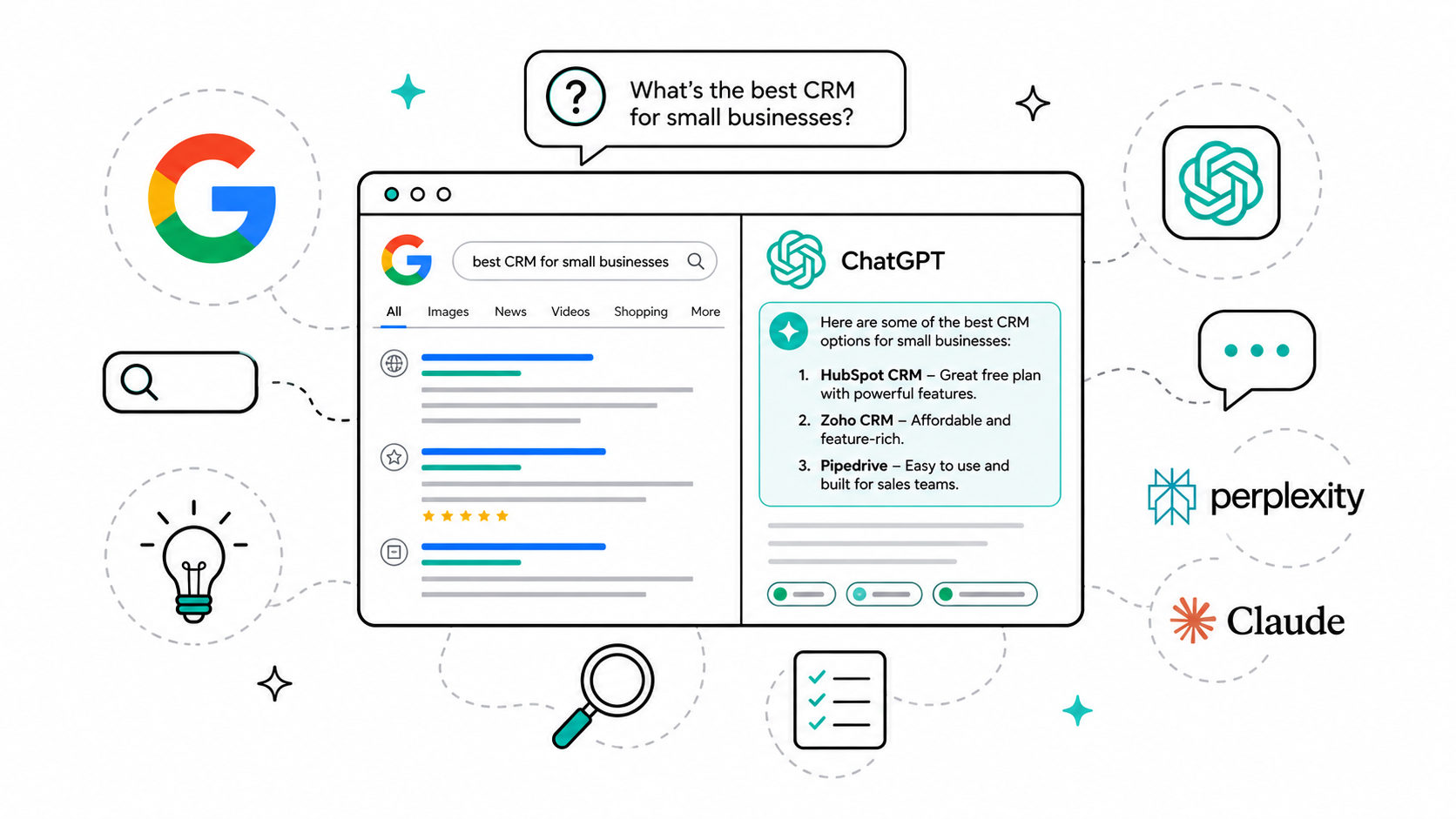
Since the introduction of AI, search has been evolving. Google’s AI Overviews, ChatGPT Search, and Perplexity AI are generating direct answers and citing sources. This means that you can gain visibility without a click if your content gets chosen as a source in an AI-generated response.
This created a concern about SEO being dead and click rates declining dramatically, which led to businesses wondering whether SEO investments still make sense or not. However, a study analyzing over 40,000 major U.S. websites found that organic search traffic declined just 2.5% year-over-year in 2025. Organic results still capture roughly 90% of all clicks from Google compared to 10% for paid. SEO is not gone, it’s just evolved and we need to evolve with it.
What is seo marketing now also includes generative engine optimization (GEO) and answer engine optimization (AEO), but both ultimately focus on the same core principles: structured, credible, authoritative content. AI systems favor content that gives a direct answer after each header, uses concise paragraphs, covers a topic fully, and comes from an authoritative source.
Structured Data: A Signal Most Sites Underuse
Structured data is code (typically JSON-LD) that gives search engines machine-readable information about your content. At minimum, most sites should implement Article schema to define content type, Organization schema to identify your company, and Author schema to surface your writers’ credentials. FAQ schema, used selectively on genuine Q&A content, can also reinforce intent and power featured snippets.
It is not a ranking guarantee, but on competitive queries it provides the clarity that can help AI systems properly attribute and identify your content.
Where to Go from Here
SEO is a long-term investment in your brand’s discoverability. The businesses that do it well are making sure the technical health of their site is updated and building valuable, useful, credible, well-structured content in their space.
The foundation is consistent regardless of where you are starting: understand your audience’s intent, build content that genuinely serves it, earn the authority to back it up, and make sure the technical side of your site is not quietly working against you.
Frequently Asked Questions About SEO
What is SEO in simple terms? SEO stands for search engine optimization. It is the work you do to make your website more visible in organic search results, so the right people find you without paid advertising.
What is SEO marketing? SEO marketing is the strategic use of SEO within a broader marketing program, mapping content and optimization to different stages of the customer journey to drive qualified traffic over time.
How long does SEO take to work? Most sites begin to see meaningful results within three to six months of consistent effort. Competitive markets can take longer. SEO is a compounding investment: results grow as your authority and content depth build.
What are the most important ranking factors? Content relevance and quality, backlink authority, technical site health, page speed, mobile usability, and E-E-A-T signals are the most consistently documented factors.
Is SEO still worth it with AI changing search? Yes. Data from 40,000 websites shows organic traffic declined just 2.5% in 2025. Organic results still receive about 90% of all Google clicks. The principles of SEO, which include clear, credible, well-structured content, are also the principles that get content cited in AI-generated answers.
What is the difference between on-page and off-page SEO? On-page SEO covers everything on your own website: content, headings, structure, and internal linking. Off-page SEO covers external signals, primarily backlinks, that build your domain’s authority.
About the Author: Grace Wong