On-page SEO is the process of optimizing the content and HTML elements on individual web pages so that search engines can understand and provide them as answers for users asking the relevant queries.
It covers everything you control directly on the page, including the words you write, the headings, the internal links, and the metadata. If you’ve ever wondered why a page that looks great still doesn’t rank, the answer usually lives somewhere in these on-page fundamentals.
This guide breaks down what on-page SEO actually is from which factors matter most to how to approach optimization in a way that aligns with both search engines and the people doing the search.
What On-Page SEO Actually Means
On-page SEO refers to all the optimization work done directly on a webpage. This is separate from off-page SEO (like building backlinks) or technical SEO (like improving site architecture and crawlability). The goal is to make each page as relevant, readable, and trustworthy as possible for a specific search query.
Search engines like Google look at on-page signals to figure out whether a page deserves to rank. When those signals are strong and consistent, your page has a much better shot at getting put in front of people by Google who are actively searching for what you offer.
The three core pillars that on-page SEO addresses are:
- Relevance: Does the content match what the user is actually searching for?
- Clarity: Is the page easy for both humans and search engines to understand?
- Usability: Does the experience on the page meet modern standards for speed, formatting, and accessibility?
Not addressing these pills means you have less of a chance to surface as a search result.
On-Page SEO vs. Off-Page SEO vs. Technical SEO
All of these different types of SEOs work together but each handles a different part of your organic search performance.
On-page SEO is about what lives on the page itself: content, keywords, headings, meta tags, internal links, and image optimization. You have full control over these.
Off-page SEO is about your site’s authority and reputation on the web. This includes backlinks from other sites, brand mentions, and signals that tell Google your content is worth citing.
Technical SEO is about how your site is built. Things like crawlability, page speed, structured data, mobile responsiveness, and site architecture fall here.
Working on and addressing on-page SEO should be your first step. You can earn great backlinks, but if the page itself doesn’t clearly communicate its topic and value, having those links won’t matter as much.
The Core On-Page SEO Factors That Actually Move Rankings
While all on-page elements contribute to a solid foundation, not all of them carry the same weight. Here are the on-page elements to focus on first.
Title Tags
The title tag is the clickable headline that appears in Google’s search results. It’s one of the strongest on-page signals you have. Your target keyword should appear here, ideally near the front, and the whole thing should stay under 60 characters to avoid being cut off in SERPs.
A good title tag does two things at once: it tells Google what the page is about, and it earns the click from searchers. Both matter.
Meta Descriptions
Meta descriptions don’t directly influence rankings, but they drive click-through rates from search results pages. Think of the meta description as your pitch. Keep it around 150-160 characters, communicate the benefit of clicking, and include a natural mention of your keyword(s).
Heading Tags (H1, H2, H3)
Your H1 is your page title and should include your primary keyword. Use one H1 per page. H2s organize your main sections, and H3s are for subsections within those. This hierarchy of heading tags is for structure and organization purposes in how your readers navigate your on-page content.
Google also uses heading structure to understand overall relevance for user search intent, which means a well-structured page can rank for many different queries, not just the primary one.
Content Quality and Search Intent
Content quality is one of the key drivers of strong on-page SEO optimization. Google’s Helpful Content system rewards pages that actually satisfy the user’s search intent, not pages that are just stuffed with keywords.
Search intent is the actual meaning behind a query. For example, someone searching “on-page SEO checklist” actually wants a list of actionable steps. Someone searching “what is on-page SEO” wants a clear explanation to help them understand what it means. Understanding that distinction helps you organize what type of content to write, how you format it, and how deep you go.
In this era of AI, a general rule of thumb is to cover the topic completely, write for a real person, and structure it clearly with headings so that you make it easier for the search engines to extract your content as an answer for the users.
URL Structure
While a small detail, URL structure should not be neglected. Clean, descriptive URLs help search engines and users understand what a page is about before they even visit it. A good tip to follow is to use your primary keyword in the slug, keep it short, separate words with hyphens, and avoid unnecessary words or dates.
For example, “visiblefactors.com/on-page-seo” is much more clearer than “visiblefactors.com/blog/post?id=1482.”
Internal Linking
Internal links are links on your current page that connect other pages on your website. They help with navigation and building authority all within your site. They distribute link equity, which is the ranking value passed from one page to another through your site. They also help search engines discover and crawl new pages, and keep users within your content ecosystem longer.
When linking internally, you want to use descriptive anchor text that actually reflects what the destination page is about. Using text like “on-page SEO checklist” or “technical SEO audit guide” differs drastically from generic phrases like “click here.”
Image Optimization
Search engines can’t see images the way humans do. Alt text (a short, descriptive attribute added to image HTML) tells search engines what an image shows. For alt text, you should write descriptive, keyword-related words and give your image files meaningful names before uploading them..
Image file size also affects page load speed, which is a confirmed ranking signal. It’s generally a good idea to compress images before publishing and consider lazy loading to improve performance.
How Keyword Placement Works in On-Page SEO
Keywords still matter, but how you use them has changed significantly. Search engines now understand the actual intent and context behind a search, not just keyword frequency. That means a page about “on-page SEO techniques” that also discusses title tags, meta descriptions, heading structure, and content quality will naturally rank for related queries without needing to stuff those phrases in everywhere.
That said, strategic placement still matters. For the best practice, your main keyword should appear in:
- The title tag (H1)
- The first paragraph of the body content
- At least one or two H2 headings where natural
- The URL slug
- The meta description
When it comes to secondary keywords, you should have them appear naturally throughout the page article they genuinely fit. Don’t include it if it sounds forced. Keyword stuffing signals low quality to both readers and search algorithms.
On-Page SEO in the Age of AI Search
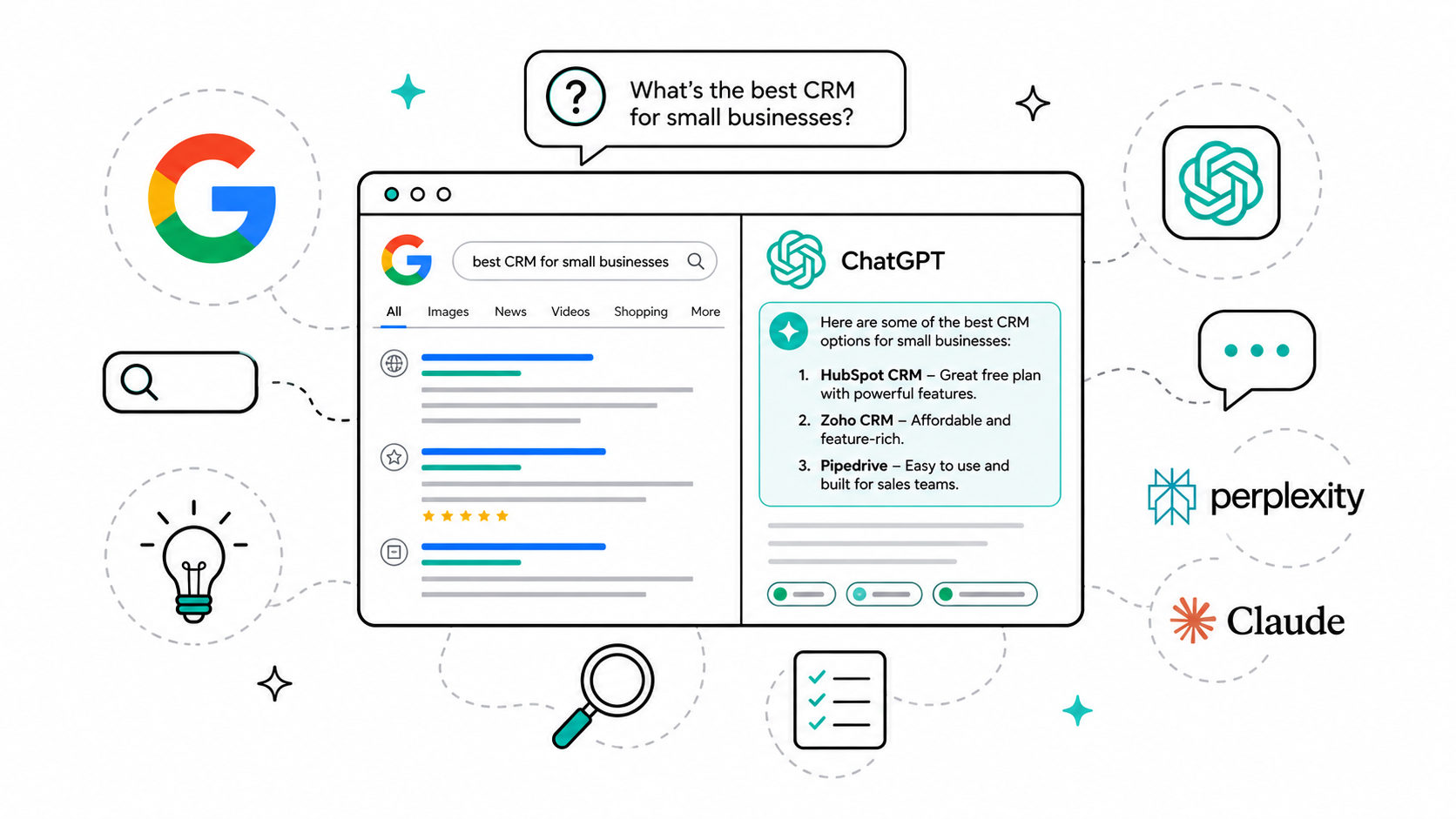
AI-generated search results have become standard across Google, ChatGPT, and Perplexity, which means on-page SEO has taken on a new direction. AI systems pull from indexed content to generate answers. To be cited and recommended, your page needs to be structured in a way that’s easy to extract.
Being easy to extract for modern search engines means that:
- Each section should be able to stand alone as a self-contained answer.
- Headers should be descriptive and question-based where appropriate (“What is…”, “How does…”).
- Definitions should precede nuance, so AI systems can pull a clean answer before diving into context.
- Structured data (like Article or FAQ schema) gives AI more signals about content type and credibility.
Simply put, write clearly. Pages that are well-organized and direct will have the upper-hand.
A Practical On-Page SEO Checklist
Before publishing or updating any page, use the checklist below to run through on-page SEO factors:
- Title tag includes the primary keyword and is under 60 characters
- Meta description is under 160 characters and communicates a clear benefit
- H1 matches the primary topic and includes the target keyword
- H2s and H3s are descriptive and organize content logically
- Main keyword appears in the first paragraph
- Secondary keywords are integrated naturally throughout the body
- URL is short, clean, and keyword-relevant
- Internal links point to related content with descriptive anchor text
- Images have descriptive file names and alt text
- Content fully satisfies the searcher’s intent without fluff
- Page loads quickly on mobile and desktop
Running this checklist on every page before publishing takes five minutes and can meaningfully improve how a page performs over time.
Why On-Page SEO Is the Foundation of Every SEO Strategy
You can run link-building campaigns, invest in technical audits, and produce content at scale, but if the on-page fundamentals are off, none of that compounds the way it should.
On-page SEO is the layer Google reads first. It tells the search engine what the page is about, who it’s for, and whether it’s worth surfacing. Getting this right is the prerequisite to everything else working.
At Visible Factors, we treat on-page SEO not as a one-time checklist but as an ongoing part of how we build and maintain content. Every page in a content strategy should be optimized before it goes live, and revisited as search behavior and algorithm expectations change.
If you’re building organic search as a channel, this is where you start.
Frequently Asked Questions About On-Page SEO
What is the difference between on-page SEO and off-page SEO?
On-page SEO covers everything you optimize on the page itself: content, keywords, headings, meta tags, and internal links. Off-page SEO refers to actions taken outside your website to build authority, primarily earning backlinks from other credible sites.
How long does on-page SEO take to show results?
It depends on the page’s starting point, competition level, and whether the site has existing domain authority. In general, meaningful movement from on-page optimization alone can happen in weeks to a few months. Newer sites or highly competitive topics take longer.
Can I do on-page SEO without tools?
Yes, most on-page fundamentals can be done manually: writing strong headings, optimizing title tags and meta descriptions, adding alt text, and building internal links don’t require paid tools. That said, tools like Google Search Console, Ahrefs, or Semrush make it significantly easier to identify what to prioritize and track whether your changes are working.
How many keywords should I target per page?
Typically, one primary keyword and a handful of closely related secondary keywords per page. Rather than targeting a strict number, think in terms of topic coverage. If your page thoroughly addresses a subject, it will naturally use many relevant terms without forced repetition.
Is on-page SEO still relevant with AI search?
More than ever. AI-generated search results pull from indexed, well-structured content. Pages with clear headings, self-contained sections, and strong on-page SEO signals are the ones most likely to be cited in AI Overviews and featured snippets. Good on-page structure makes content retrievable for both humans and machines.
Final Thought
So, what is on-page SEO? It is the work that makes everything else in your organic strategy actually land. A well-optimized page earns more from the same backlinks, stays discoverable longer, and converts more of the traffic it attracts.
The question here whether your current pages are actually optimized to communicate what they’re about clearly enough for Google, and for the searchers who matter most.
About the Author: Grace Wong