KEY TAKEAWAYS:
|
What Is Internal Linking? SEO Architecture Strategy Guide (2026)
Internal linking is the practice of connecting one page on your website to another page on the same domain using hyperlinks. If you have ever wondered how to affects your SEO, the data shows that pages that receive 40 or more internal links generate up to four times more organic traffic than poorly linked pages, according to a 2024 analysis of 23 billion internal links by Zyppy and Ahrefs.
And yet, Ahrefs data shows that 66.2% of web pages have only one internal link pointing to them. That gap is a significant opportunity for sites that are willing to build their internal linking strategy intentionally.
This guide covers what internal linking is, how it works in SEO, and how to build a structure that distributes authority, improves crawlability, and supports your topical authority goals.
How Internal Linking Works in SEO
An internal link is any hyperlink pointing from one URL to another URL on the same domain. Navigation menus, breadcrumbs, footer links, and contextual links within your content body all count.
In SEO terms, internal links serve three core functions:
- Crawlability: Google’s crawler follows links to discover pages. Pages without any internal links pointing to them, called orphan pages, are often missed entirely during crawl.
- Link equity transfer: When a high-authority page links to another page on your site, it passes some of its ranking power, sometimes called PageRank or link juice, to the destination.
- Relevance signals: The anchor text you use and the surrounding content tell Google what the linked page is about, reinforcing its topical relevance.
Google’s John Mueller has called internal linking “super critical for SEO… one of the biggest things you can do on a website.” This is pretty much a direct acknowledgement that site architecture does shape how Google understands and values your content.
Not All Internal Links Carry Equal Weight
Contextual links embedded within your content body carry the most SEO value because they appear with relevant surrounding text and descriptive anchor text. Navigation links, breadcrumbs, and footer links all pass some equity, but they carry less weight than contextual links placed naturally in the body of a page. Understanding backlinks and how link profile architecture works can also help you define your linking strategies.
Why Internal Linking Affects Your Rankings More Than You Think
Research from JetOctopus in 2024 showed that optimized internal linking structures improved crawl rates from 40% to 70%. For large websites, this directly determines which pages get indexed and how quickly.
A Semrush case study tracked two competing SaaS companies with similar domain authority scores. The company with a well-organized, contextually relevant internal linking strategy achieved over four times the monthly organic traffic of its competitor. The only meaningful structural difference was how their internal links were organized.
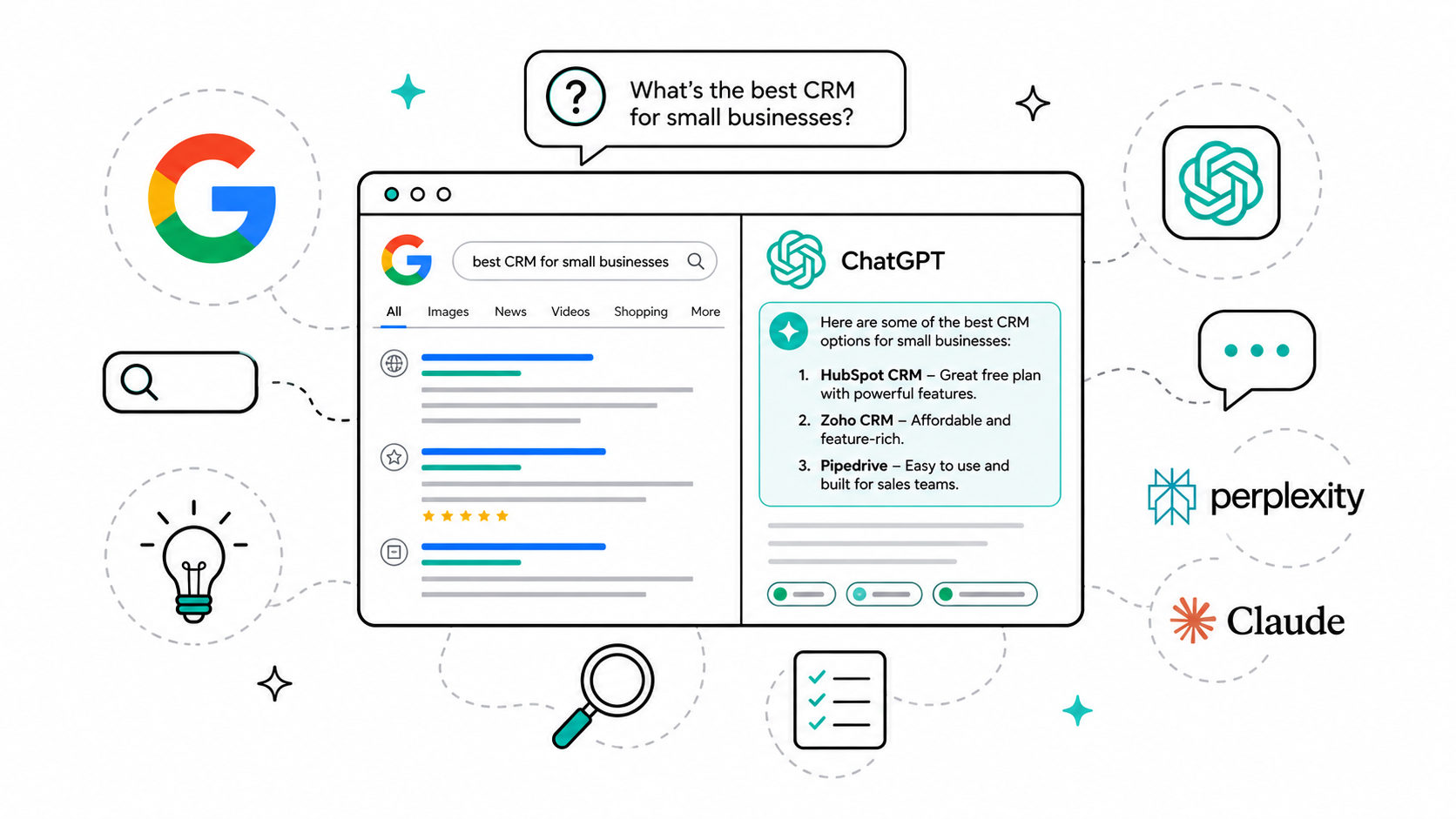
Beyond traditional search, research from Wellows and Yext in 2025 found that bi-directional internal linking increases AI citation probability by 2.7 times. As search shifts toward AI-generated answers in tools like Google AI Overviews and Perplexity, your site’s internal link structure now affects whether you appear in those surfaces, not just in traditional search results.
This is also closely related to your overall domain authority. Strong internal linking supports the equity you have already earned through backlinks.
The Hub-and-Spoke Model for Topical Authority
The hub-and-spoke model is probably the most structured approach to internal linking for SEO. A hub page can also be called a pillar page. These pages cover a broad topic. Spoke pages are individual articles that go deeper on specific subtopics related to that hub.
For example, you might have a pillar page about “SEO” and spoke pages that dive deeper into SEO topics such as “what is local seo?” or “what is technical seo?”
Each spoke links back to the hub. The hub links out to every spoke. And where contextually relevant, the spokes link to each other. The result is a cluser of links that signals to Google that your site is an authoritative source on a subject area.
How to Build Your Hub-and-Spoke Architecture
- Choose your hub topic. Pick a broad subject that supports five to ten spoke articles and directly relates to your business goals. This becomes your pillar page targeting the competitive head keyword.
- Build out your spokes. Each spoke answers a specific question or subtopic under the hub. Spokes target long-tail keywords while the hub targets the competitive head term.
- Link intentionally. Every spoke links back to the hub using relevant anchor text. The hub links to all spokes. Add spoke-to-spoke links only when there is a genuine contextual reason to do so.
- Keep depth manageable. No page in your cluster should be more than three clicks from the homepage. A flat architecture distributes link equity more efficiently and improves crawl coverage.
This model also helps combat keyword cannibalization. When every spoke links to a single hub using consistent anchor text, you remove ambiguity about which page is the topical authority for the head keyword. This should ideally be part of your on-page SEO strategy.
How to Distribute Link Equity to the Right Pages
Link equity is the ranking authority that flows from one page to another through links. When an external site links to your blog post, that page gains equity. When that blog post links internally to your service page, some of that equity transfers forward.
Not every page needs the same amount of internal link support. Prioritize these page types when building your internal linking strategy:
- Revenue pages: Product and service pages that drive conversions. These typically have few external backlinks but benefit significantly from internal equity.
- Pillar pages: Comprehensive guides targeting competitive head keywords. These need strong incoming links from relevant spoke pages to consolidate authority.
- New content: Freshly published pages have zero external backlinks. Adding two to three internal links from established, high-traffic pages gives new content a crawl and ranking head start.
- Conversion pages: Contact forms, pricing pages, and signup flows. These pages are important for business goals and deserve intentional internal link support.
Avoid spreading links too thin. Pages with hundreds of internal links dilute the value of each one. Remember, the goal is purposeful linking, not linking every page to everything.
Anchor Text: How to Send the Right Relevance Signal
Anchor text is the clickable, visible text of a hyperlink. It is one of the most direct signals you can send to Google about what a destination page covers. The Zyppy study found that pages using exact-match anchor text received five times more organic traffic than those using generic phrases like ‘click here.’
That does not mean you should stuff keyword phrases into every link. The goal is to sound natural, not have contrived phrases. Here is how the main anchor types compare:
| Anchor Type | Example | When to Use |
|---|---|---|
| Exact match | “internal linking strategy” | Sparingly, strong relevance signal |
| Partial match | “our guide to internal linking” | Your everyday workhorse |
| Branded | “Visible Factors SEO blog” | Safe; adds link profile diversity |
| Descriptive generic | “see the full breakdown” | Only when context makes topic clear |
One good rule of thumb to follow is to always point the same anchor text phrase to the same destination URL. If you use ‘internal linking strategy’ as anchor text across ten pages, they should all point to the same page. Sending the same anchor to multiple different URLs creates cannibalization signals that can suppress all the pages involved.
The surrounding content matters too. Text signals do affect rankings, and Google analyzes the sentences before and after a link to understand the relationship between pages. A well-placed contextual link with relevant surrounding text sends a stronger relevance signal than a bolted-on link with no context.
How to Audit and Scale Your Internal Linking
For sites publishing at volume, manually managing every internal link becomes impossible and ineffective. A regular audit workflow is more sustainable than trying to manage links one by one. You can leverage tools like the ones below to help make internal linking more manageable:
- Screaming Frog: Crawl your site to identify orphan pages, find pages with too few or too many internal links, and audit anchor text distribution.
- Ahrefs Site Audit: Run internal link reports to see which pages carry the most equity, where link opportunities exist, and which pages are not being crawled efficiently.
- Link Whisper (WordPress): Suggests contextually relevant internal links as you write or edit content, reducing manual lookup time.
- Google Search Console: Identify high-traffic pages with strong existing backlinks. These are your best sources for passing equity to newer or lower-ranking pages.
Site performance also plays a role in how efficiently your links get crawled and equity gets passed. Technical issues like slow load times can limit crawl budget and reduce how many pages Google visits per crawl cycle.
Building Your Internal Linking Strategy
Internal linking at its core is one of few SEO factors entirely within your control. You do not need more backlinks or a higher domain authority score to start improving your site’s architecture right now. You just need a clear structure and be consistent about executing it.
Every new page you publish is basically an opportunity to strengthen the cluster it belongs to. You can link it from topically relevant, already established pages, then link it back to the hub. Remember to use descriptive anchor text. Over time, each new piece of content makes your existing content stronger, and your existing content makes the new piece easier to rank.
About the Author: Grace Wong