What Is Generative Engine Optimization (GEO)?
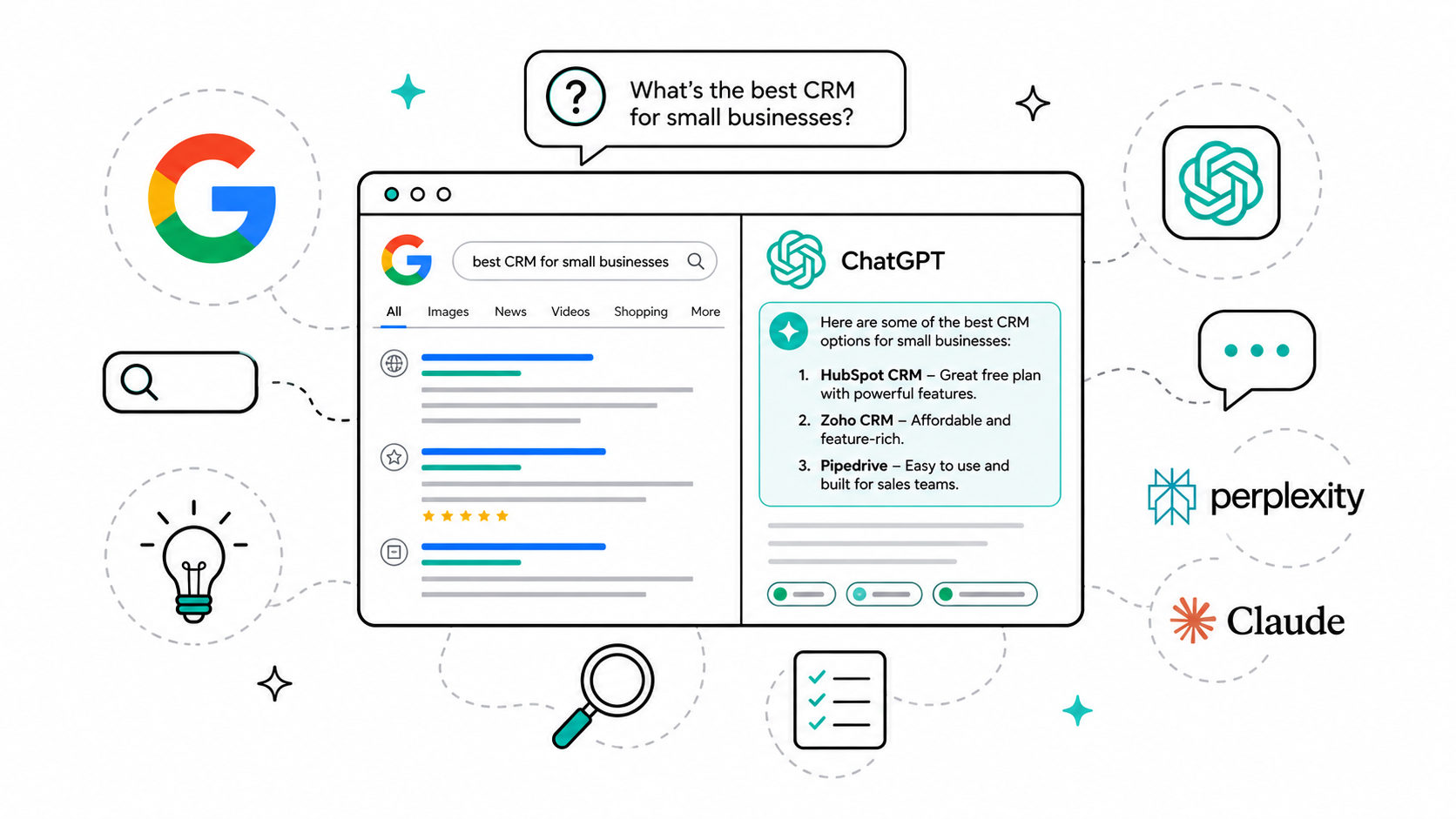
By now, you’ve probably heard the phrase “GEO” being thrown around. Perhaps in comparison to SEO or AEO. Generative engine optimization (GEO) is the practice of structuring and optimizing content so AI platforms like ChatGPT, Perplexity, Google AI Overviews, and Claude cite it when generating answers to user queries. If you want your brand to show up in those AI-generated responses, GEO is how you get there.
Search has evolved since AI was introduced and now operates differently than before. It’s no longer just about “blue links.” Users can get answers without ever clicking on one and the brands showing up in those answers are the ones that will win attention in 2026 and beyond.
What Is GEO, Exactly?
Generative engine optimization is the process of making content retrievable, citable, and trustworthy enough for AI systems to pull from when generating responses for users. Unlike traditional SEO, which focuses on ranking in search engine results pages (SERPs), GEO is more about whether your content earns a citation inside the answer itself.
When someone asks an AI search engine like ChatGPT “What’s the best CRM for a small B2B team?” or maybe “How does content marketing work?”, those platforms don’t just list URLs. They process information from multiple sources and use the most probable answers. GEO is making sure you’re doing the things that make your content one of those sources.
Why GEO Matters Right Now
You can’t go without GEO if you’re doing SEO. AI-referred sessions jumped 527% year-over-year in the first half of 2025, according to Previsible’s 2025 AI Traffic Report. ChatGPT processes 2.5 billion prompts per day as of mid-2025. Perplexity has surpassed 780 million monthly queries. Google AI Overviews now appears across 200+ countries in over 40 languages. Users are not just going to one search engine for answers, but multiple. That’s why it’s wise to incorporate GEO in your already existing SEO practices.
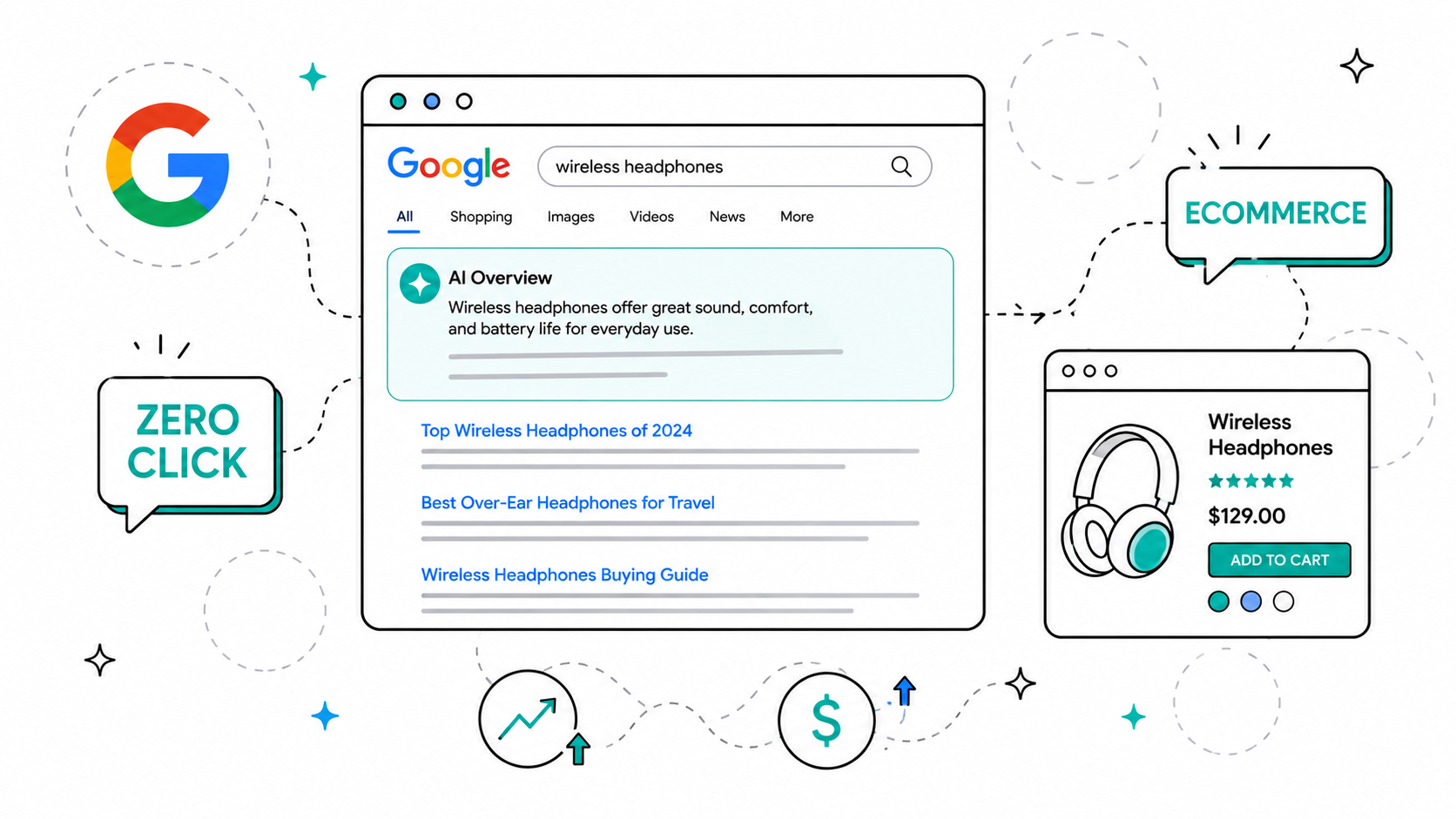
65% of Google searches now end without a click, driven by AI Overviews, featured snippets, and knowledge panels. If users are getting answers without visiting your site, the goal becomes owning the answer they see. GEO is part of how you get there.
How Does GEO Work?
To understand how generative engine optimization works, you need to understand how these AI platforms actually select content. Most of them run on something called Retrieval-Augmented Generation, or RAG. Here’s what the process looks like:
- A user submits a query in natural language
- The AI converts it into a semantic representation and searches for relevant sources
- It scores those sources based on relevance, authority, recency, and structural clarity
- The highest-scoring sources become candidates for citation
- The AI synthesizes a response from those sources and attributes them inline
That scoring step is an important part of RAG in GEO. Optimized content scores higher because it’s structured for extraction, not just readability. This is what separates a page that ranks well from a page that also gets cited in AI answers.
GEO vs. SEO: What Actually Changes
GEO builds on the same foundation as SEO. It’s not here as a replacement but rather complements everything you’re already doing in SEO. You still need authoritative content, a technically accessible site, and clear signals of expertise. The fundamentals don’t go away. What changes is what you’re optimizing toward and how you’re doing it.
In traditional SEO, the goal is ranking in SERPs. You are optimizing for keywords, backlinks, click-through rate, and position.
Meanwhile, the goal of GEO is being cited in AI answers. You optimize for citation authority, content extractability, and clarity.
Here are a few key differences worth knowing:
- Source of answers: AI engines synthesize information. Search engines list URLs.
- Ranking factors: Citation authority and structured data matter more than backlinks alone.
- User intent signals: Conversational queries outperform rigid keyword phrases.
- Measurement: AI citation frequency and share of voice matter alongside organic ranking.
The good news is that content structured for GEO tends to perform better in traditional SEO too. Clear headings, direct answers, cited facts, and strong E-E-A-T signals align with what Google’s helpful content guidelines ask for. That means that if you stick to the fundamentals of good SEO, you are likely already creating a solid foundation for GEO.
Core GEO Strategies That Drive Citations
1. Structure Content for Direct Answers
AI models retrieve information in chunks, not just the page level. That means a single well-structured FAQ, a clear subheading, or a concise summary table can make sense on it’s own and be cited independently of the full article. Write in concise blocks where each section can stand on its own as a complete, factual answer.
Open every page with a direct answer to the main search query in the first 40 to 60 words. Structure H2s as questions users actually ask instead of statements. Keep paragraphs under 120 words. The easier it is for an AI to extract a clear answer, the more likely it is to cite your content.
2. Build E-E-A-T Signals Into Every Page
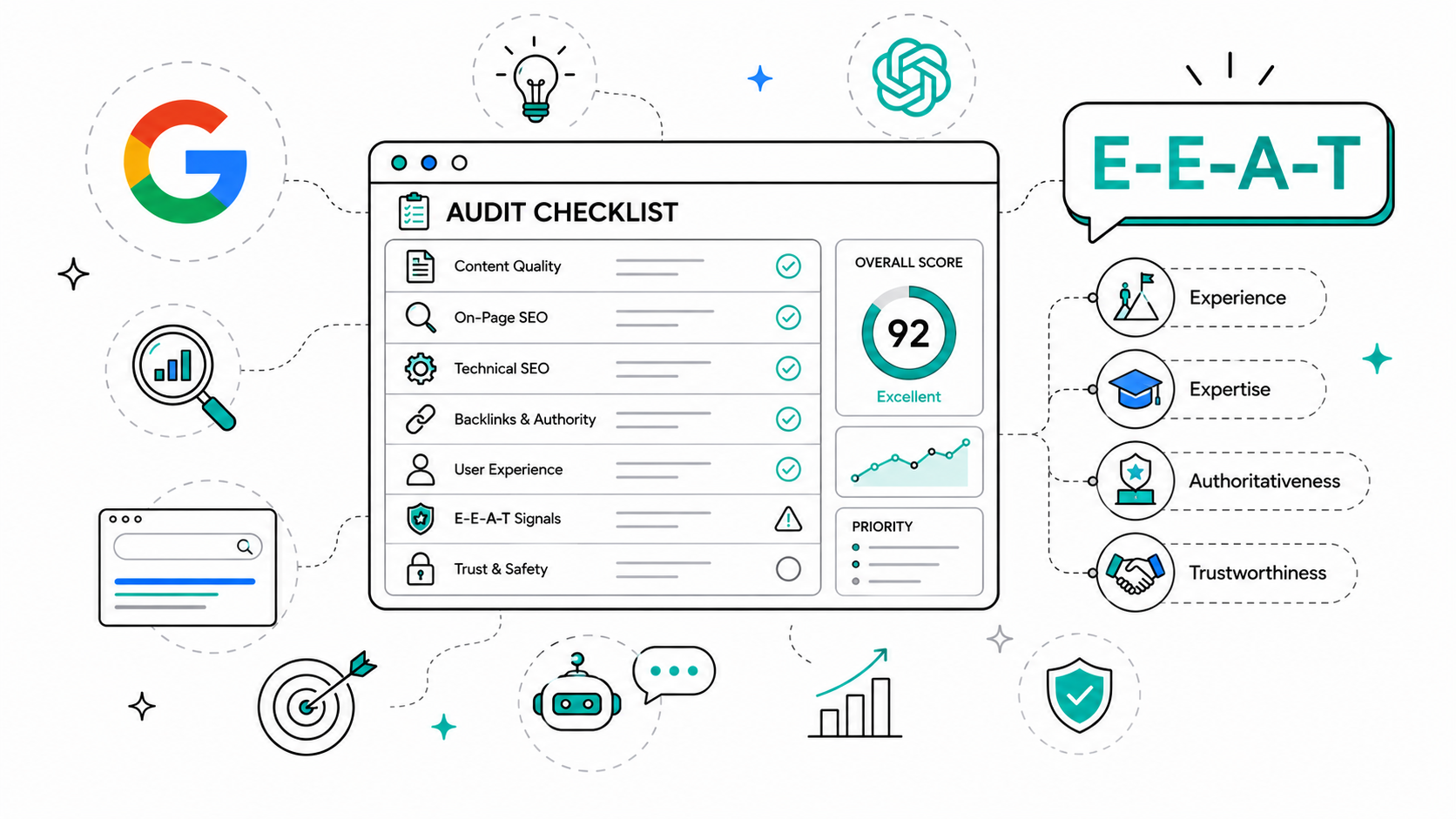
E-E-A-T, which stands for Experience, Expertise, Authoritativeness, and Trustworthiness, is the same quality signal Google uses, and it carries weight with AI engines too. Research from Princeton University on AI citation patterns shows that AI systems strongly favor authoritative, third-party-endorsed sources.
Here are some practical ways to build E-E-A-T for GEO:
- Include author bios with credentials and real experience
- Cite reputable primary sources and link to data from recognized industry authorities
- Keep content current with regular accuracy updates
- Earn third-party mentions through earned media, reviews, and industry directories
Including E-E-A-T helps create more credibility for your content, making it more likely that AI engines extract from your source.
3. Use Schema Markup and Semantic HTML
Schema markup helps AI crawlers understand what your content is about and how it’s structured. FAQ schema, HowTo schema, and Article schema are particularly useful because they map directly to the types of queries AI engines answer.
Entity clarity also matters. One way to include this is to establish one primary entity per page and connect it to authoritative references like Wikipedia entries, industry databases, and your internal pillar content through strategic linking. Inconsistent naming confuses both search engines and AI models.
4. Make Your Content AI-Crawlable
Many sites accidentally block AI crawlers while allowing Googlebot. Check your robots.txt to ensure you’re permitting Bingbot, OAI-SearchBot, and ChatGPT-User for live answer lookups. If AI systems can’t access your content, they can’t cite it. The concept is the same as technical SEO.
5. Build Multi-Platform Presence
AI engines don’t just pull from your website. Reddit, LinkedIn, and YouTube were among the top cited sources across major LLMs as of late 2025. When customers review your product on G2 or Trustpilot, when journalists mention your brand in articles, when community discussions on Reddit recommend your service, those signals add up.
Earned mentions across multiple platforms also give AI systems clearer signals about your credibility. The more independent sources discussing your brand in relevant contexts, the stronger your citation authority becomes.
How Do You Measure GEO Performance?
Traditional SEO metrics capture part of the story. GEO requires a different measurement framework. Here are some terms you’ve probably seen thrown around when it comes to GEO:
- AI citation frequency: How often your brand appears in AI-generated answers
- Share of voice: Your mentions versus competitors across AI platforms like ChatGPT, Perplexity, and Google AI Mode
- Citation sentiment: Whether AI positively represents your brand or brings up negative information
- AI-referred traffic: Visits and conversions from AI search, tracked through GA4 source attribution
If you want a quick baseline, manually searching engines like ChatGPT and Perplexity with your target topics and tracking where your brand appears is a low-cost starting point.
Final Thoughts
Generative engine optimization doesn’t require rebuilding your content from scratch. Most brands can start by auditing what they already have and making it more extractable by adding direct answers early in each section, implement FAQ schema on your most important pages, verify that AI crawlers can access your site, and tracking how often your brand shows up in AI-generated responses for your core topics.
Frequently Asked Questions About Generative Engine Optimization
Does GEO replace SEO?
No. GEO builds on SEO, not against it. Research from Semrush shows that users who adopt AI search tools don’t completely stop using Google. They add new search behaviors on top of existing ones. SEO, GEO, and traditional authority-building work together as a unified strategy for staying discoverable across all channels.
Which AI platforms should I optimize for?
Ultimately it depends on where your audience hangs out. You can start with the platforms driving the most adoption: Google AI Overviews (already integrated into billions of searches), ChatGPT Search, and Perplexity. Each has distinct citation patterns. Google AI Overviews favor content that already ranks organically and has strong E-E-A-T. Perplexity rewards recency and community validation. ChatGPT tends toward encyclopedic, well-structured sources.
How long does GEO take to show results?
FAQ optimization with proper schema markup typically delivers measurable results within 4 to 8 weeks. Featured snippet improvements can appear faster. Building broader citation authority for AI responses is a longer play, usually 3 to 6 months. Like SEO, GEO compounds over time.
What content formats work best?
Research reports, comprehensive FAQ resources, how-to guides, data-driven comparisons, and in-depth informational articles consistently perform well across both GEO and traditional SEO. High semantic density, meaning content that covers a topic cluster thoroughly with precise terminology, is a consistent predictor of AI citation.
About the Author: Grace Wong