What Is AEO? Answer Engine Optimization Explained
Most traditional SEO strategies were always built around ranking in Google. By now, you probably know that a growing share of your audience is no longer just starting there. They are also asking ChatGPT, Google AI, Perplexity or Copilot for answers to queries without ever clicking a link. If your brand is not one of the results being cited in those answers, then your competitors are.
Answer engine optimization (AEO) is built to solve this. This guide covers what AEO is, why it matters for your content strategy right now, and how it differs from traditional SEO and GEO.
What Is Answer Engine Optimization (AEO)?
Answer engine optimization is the process of optimizing your content, technical markup, and authority signals so that AI-driven answer engines can parse, trust, and cite your brand when responding to user queries. The goal is not just to rank on a search results page. It is to become the source that an AI platform quotes directly when someone asks a question in your space.
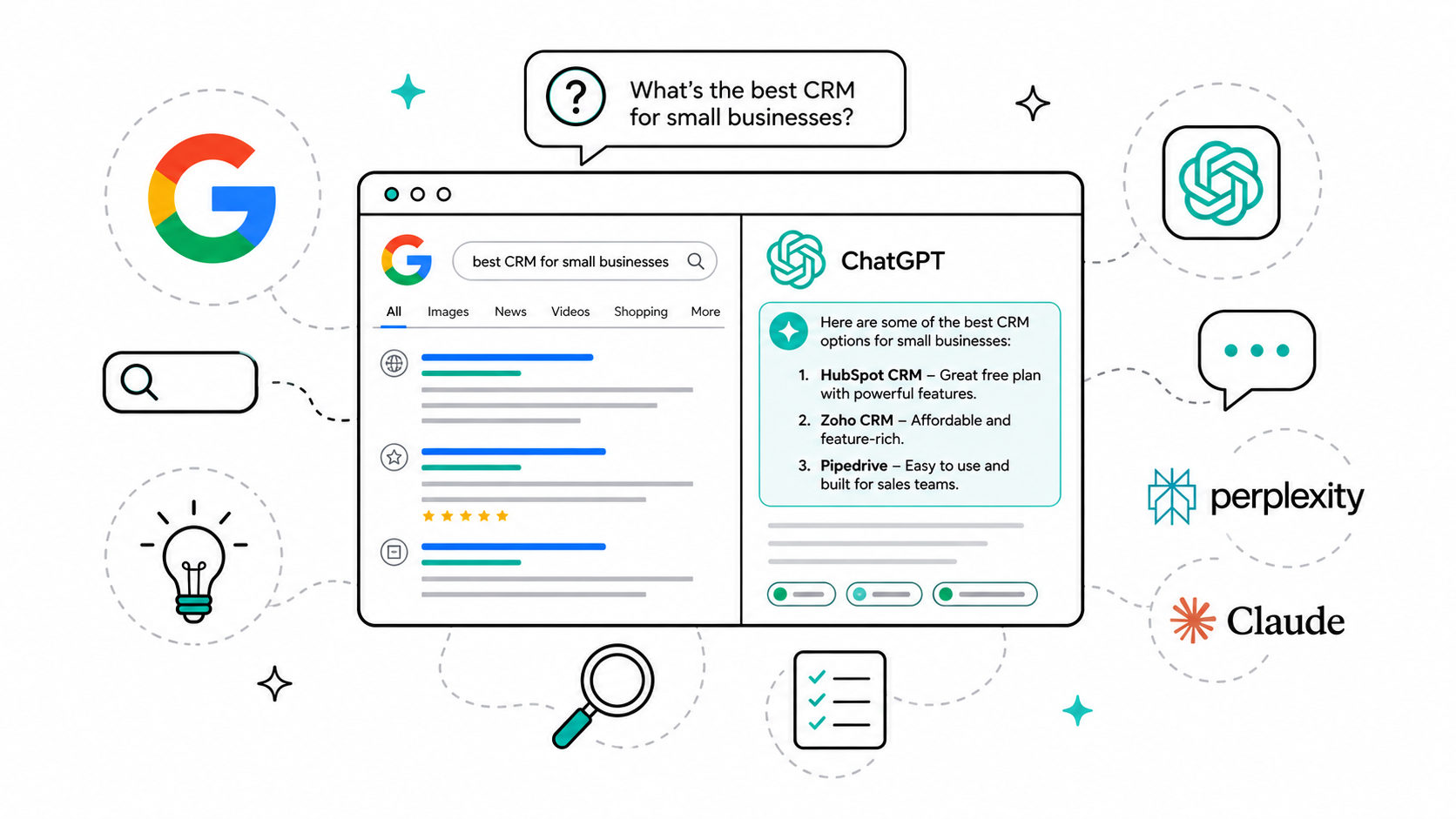
AI platforms do not return ten blue links. They synthesize an answer and, in most cases, cite one to five sources. AEO is about earning one of those citation slots.
Here are some of the platforms where AEO matters include:
- Google AI Overviews (appears in approximately 18-20% of searches as of early 2026)
- ChatGPT, which now serves over 800 million users per week
- Perplexity, built around answer-first, citation-native results
- Microsoft Copilot, integrated across Bing and Microsoft 365
- Claude and Gemini, increasingly used for research and business queries
Why AEO Matters Now: The Shift to Zero-Click Search
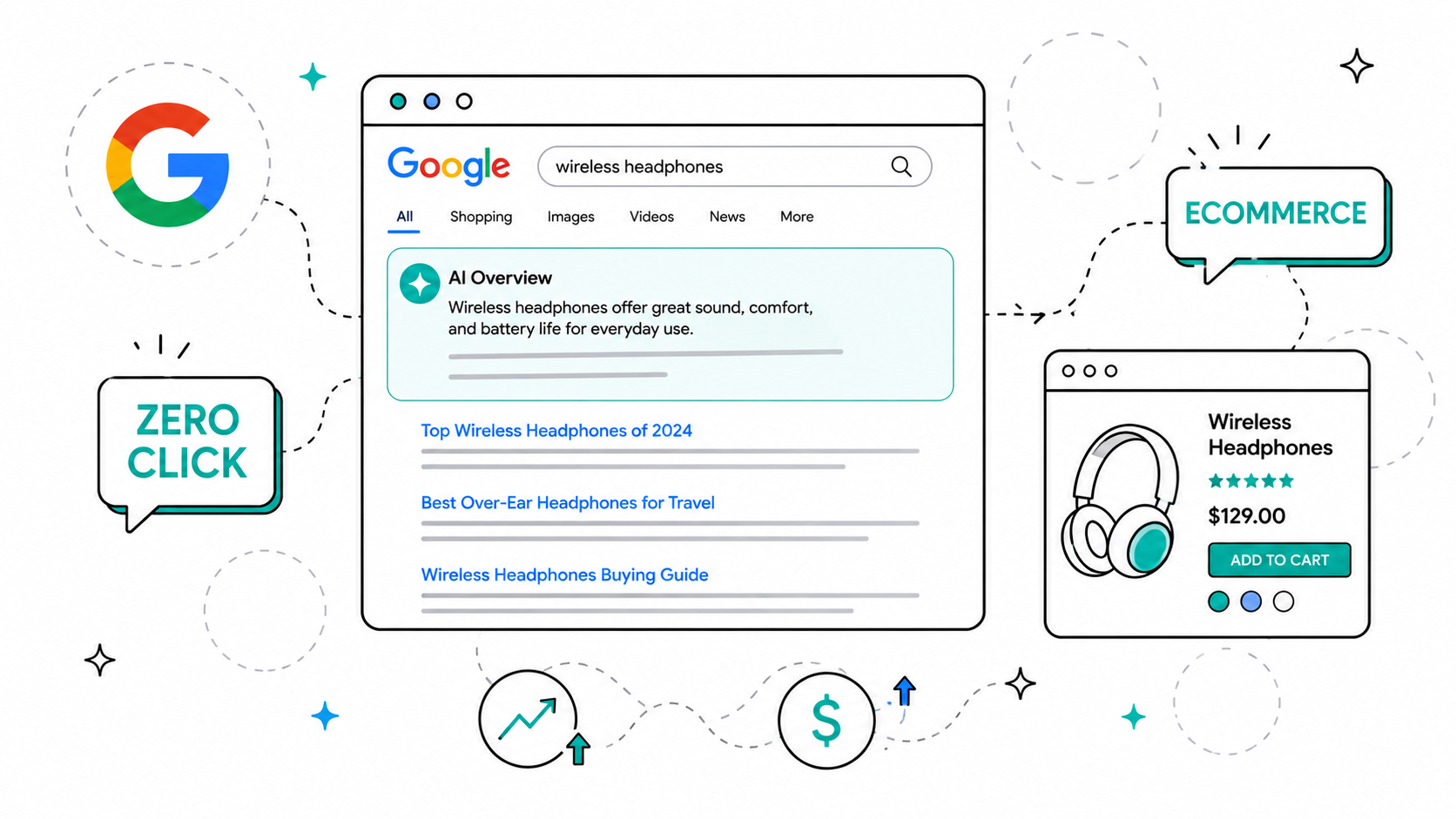
Zero-click searches have reached 69% of all Google searches in 2025, up from 56% in 2024. That means more than two out of three searches end without a user visiting a website. The answer appeared on the page, or an AI delivered it directly, and the user moved on.
At the same time, AI search adoption is accelerating. According to Pew Research Center, 34% of U.S. adults reported using ChatGPT as of mid-2025, roughly double the rate from 2023. eMarketer estimates that over 105 million U.S. adults will use generative AI for search-related tasks in 2026.
This means that users are increasingly expecting a direct, synthesized answer. And for brands, it means that showing up in AI-generated responses has become a new form of visibility that sits alongside, and in some cases above, traditional organic rankings.
NerdWallet is a useful case study here. The company saw a 20% decline in website traffic yet still reported 35% revenue growth, largely because their content and brand continued to surface in AI answers and featured snippets. Brand presence in the answer, not just the click, drove the outcome.
AEO vs SEO: How They Differ and How They Work Together
The AEO vs SEO conversation is not about choosing one over the other. They are complementary practices that serve different parts of the same system. That said, they have different objectives, tactics, and success metrics.
| Traditional SEO | AEO (Answer Engine Optimization) | |
| Primary Goal | Rank high in search results to earn clicks | Be cited as the answer in AI-generated responses |
| Success Metric | Rankings, organic traffic, CTR | AI citation frequency, brand mentions, direct/branded traffic |
| Content Focus | Keyword relevance, topical depth | Structured answers, conversational Q&A, entity clarity |
| Technical Layer | Crawlability, speed, mobile | Structured data (schema.org), FAQ markup, author provenance |
| User Journey | User clicks to your site | User receives your answer without a click |
SEO gives you discoverability while AEO gives you the citation. You need both. A strong SEO foundation, crawlable pages, quality backlinks, site authority, is what makes AI systems trust your content enough to cite it in the first place. In simple terms, you can’t have “strong AEO” without strong SEO.
How do Answer Engines Actually Work?
Understanding the mechanics helps explain why AEO optimization requires a different approach than traditional SEO.
AI answer engines use natural language processing (NLP) to interpret the meaning and intent behind a query, not just the keywords. They crawl and index the web, storing semantic representations of content. When a user asks a question, the system identifies the best-matching content, synthesizes a response, and attributes a source.
There are three things that determine whether your content gets cited:
- Extractability: Can the AI cleanly pull a complete, accurate answer from your page? Clear headings, direct answers at the top of each section, and well-structured formatting all help.
- Authority: Does your brand and site signal credibility? E-E-A-T factors, author attribution, backlink profile, and consistent brand mentions across the web all matter.
- Freshness: AI systems prefer updated, current content. Research from Amsive found that most LLM citations skew toward recently published or updated content, with citation rates decaying significantly within one to two months of publication.
How Do You Optimize for AEO?
AEO optimization is not a single tactic or a one time action. It is a set of content, technical, and authority decisions that, applied consistently, make your site easier for AI systems to trust and cite. Here are some things to prioritize.
Structure Content Around Questions and Direct Answers
AI systems are built to find answers to questions. Therefore, your content should be too. You should lead each major section with the question it answers, then provide a concise, complete response (roughly 40 to 60 words) before expanding with detail. This mirrors the format AI systems use to extract and surface answers.
You can leverage your Google Search Console data, People Also Ask boxes, and forum research to identify the exact phrasing your audience uses. Those are the questions your headings and sections should reflect.
Use Structured Data to Signal What Your Content Is About
Schema markup tells AI systems and search engines what type of content a page contains and how its components relate. For AEO, the most useful schema types include FAQPage, Article, HowTo, and Organization. Adding author schema, especially for expert contributors, has also been shown to improve citation rates for older content.
Build Visible Expertise and Authority Signals
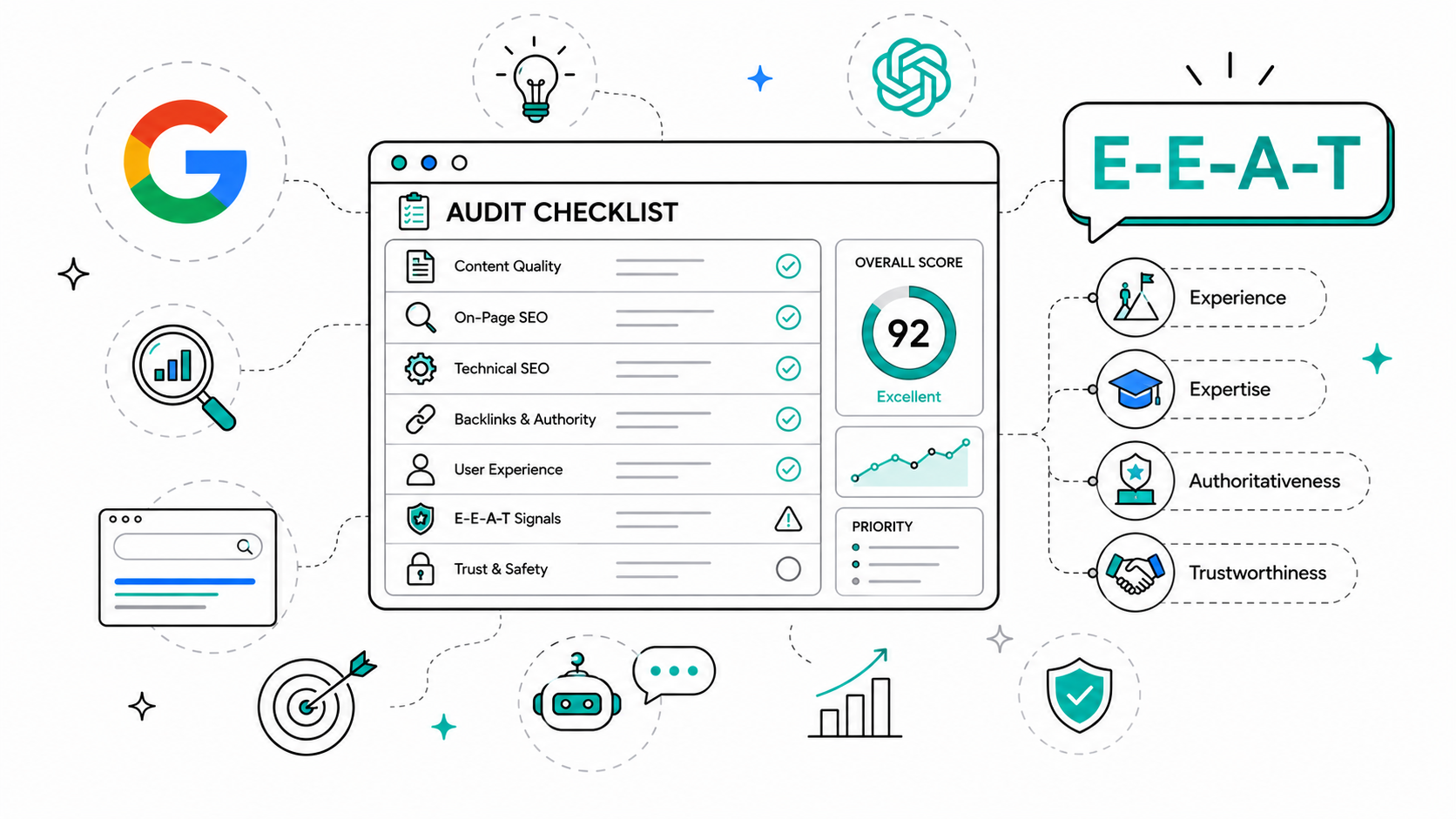
AI systems are trained to cite credible sources. Credibility is communicated through author bios with real credentials, consistent brand mentions across the web, links from recognized industry sources, and accurate, well-sourced content. The E-E-A-T framework (Experience, Expertise, Authority, Trust) applies directly to AEO.
You want to include things like author bios and an updated About page.
Add FAQ Sections That Match Real Search Queries
FAQ sections do double duty for AEO. They give AI systems clear, self-contained question-and-answer pairs to extract, and they align your page with the conversational query patterns that answer engines are built to handle. Each FAQ answer should be complete in one to three sentences without requiring the reader to reference other sections.
Align Your URL Slugs and Meta Tags with Query Intent
Research from Amsive found that AI models scan URL slugs to assess relevance. For example, a URL like /what-is-answer-engine-optimization performs better than /blog/post-123 because it directly signals the content’s purpose to both humans and machines. You should apply the same logic to meta titles and descriptions. Write them to answer the question, not just label the topic.
AEO and Voice Search: Optimizing for How People Actually Talk
Voice search is AEO read aloud. When someone asks Siri, Alexa, or Google AI a question, the system pulls from the same answer-ready content formats that AI search relies on. Voice queries are typically longer and more conversational than text queries, which means your content needs to reflect natural spoken language, not keyword-stuffed phrases.
The key to this is to write as if you are explaining something to a colleague in a meeting. Short sentences, plain language, direct answers. That phrasing is what voice assistants favor, and it is what makes your content more quotable across all AI search surfaces.
How to Measure AEO Performance
Traditional traffic metrics do not capture AEO impact. Your Google Analytics dashboard cannot show you how often ChatGPT or Perplexity cited your content. You need to track different signals.
Here are the metrics to monitor for AEO optimization:
- Branded search volume: If AI platforms mention your brand without a link, users often search for you directly afterward. Watch for spikes in branded queries.
- Featured snippet performance: Filter Google Search Console to identify which queries earn featured snippets for your pages. This correlates with AI citability.
- Direct traffic trends: Increased AI visibility often shows up as direct traffic growth, as users who encountered your brand in an AI answer visit your site directly later.
- Manual AI citation testing: Regularly query ChatGPT, Perplexity, and Google AI on your key topics. Track when and how your brand appears, and how responses change over time.
AEO VS GEO: What’s the Difference?
We can’t address AEO without addressing GEO. Many people confuse AEO and GEO together, or use them interchangeably. While they are related or perhaps even similar in certain ways, they are still different from each other. AEO targets specific, factual queries and optimizes content to be the direct answer. GEO is a bit broader, as it focuses on building enough topical authority and cross-platform presence that AI systems reference your brand when synthesizing longer, multi-source responses to open-ended questions.
For example, AEO can win you the answer to “What is answer engine optimization?” while GEO wins you a mention inside “What content marketing strategies are working in 2026?” The difference between the two is that one is mainly a citation slot and the other is a brand reference integrated and pulled into a synthesized response.
Frequently Asked Questions About AEO
What does AEO stand for?
AEO stands for answer engine optimization. It refers to the practice of structuring content and building authority so that AI-powered platforms such as ChatGPT, Google AI Overviews, and Perplexity cite your brand as a trusted source when answering user queries.
Is AEO the same as SEO?
No, but they are closely related. Traditional SEO focuses on earning rankings in search results to drive clicks. AEO focuses on being cited in AI-generated responses, which often result in zero clicks to your site. SEO provides the authority foundation that makes AEO possible. You need both.
What is AEO in digital marketing?
In digital marketing, AEO is a strategy for maintaining brand visibility as search behavior shifts toward AI platforms and conversational queries. It involves optimizing content structure, technical markup, and authority signals so that AI systems preferentially reference your brand when generating answers for users.
Does AEO replace traditional SEO?
No. AEO builds on top of traditional SEO, not in place of it. Crawlability, site speed, backlinks, and topical authority are still prerequisites. AEO extends the strategy to ensure your well-optimized content is also readable, trustworthy, and citable by AI systems.
How long does AEO take to show results?
The answer depends on domain authority and competition, but if you are consistent with publishing well-structured AEO content, you could see citation signals within 2-4 weeks. Results vary by domain authority and competition, but many practitioners report early citation signals within two to four weeks of publishing well-structured AEO content. However, because AI citation patterns shift frequently, sustained visibility requires ongoing content updates and a consistent publishing regimen.
About the Author: Grace Wong