At the National Retail Federation’s 2026 conference, Google CEO Sundar Pichai unveiled a new protocol for agentic commerce and a suite of AI commerce tools that most of the tech press covered as “new shopping features.” I think they’re missing the bigger story.
What Google announced is not just about shopping. It’s about cementing control over the entire search purchase journey the same way featured snippets and knowledge panels gave them control over information discovery. And if you’ve spent any time in SEO over the past decade, you know exactly how that played out.
I think this changes the entire DTC / E-Commerce Marketing and Advertising landscape.
Google Is Building the Rails Everyone Else Will Have to Ride
The centerpiece of Google’s announcement is the Universal Commerce Protocol (UCP), an open standard for AI agents to handle shopping from product discovery through checkout and post purchase support. Google co-developed it with Shopify, Etsy, Wayfair, Target, and Walmart. Over 20 other companies have endorsed it including Visa, Mastercard, Stripe, American Express, Best Buy, Home Depot, and Macy’s.
On the surface, “open standard” sounds collaborative. But let’s be honest about what’s happening here. Google is setting the rules for how agentic commerce works. They are building the infrastructure that every AI shopping assistant will need to plug into. And, Google is doing it knowing they own the largest search engine and most distribution with extremely high intent traffic ready to purchase.
Think about the number of queries that will now just convert within SERPs, AI Overviews, AI Mode and Google Shopping.
This is smart, strategic positioning. By making UCP open and getting major retailers to co-develop it, Google avoids antitrust concerns while still ensuring they’re at the center of the ecosystem. (I wanted to insert a chess piece icon here but you guys would then think it’s AI so I didn’t…but ya, Checkmate).
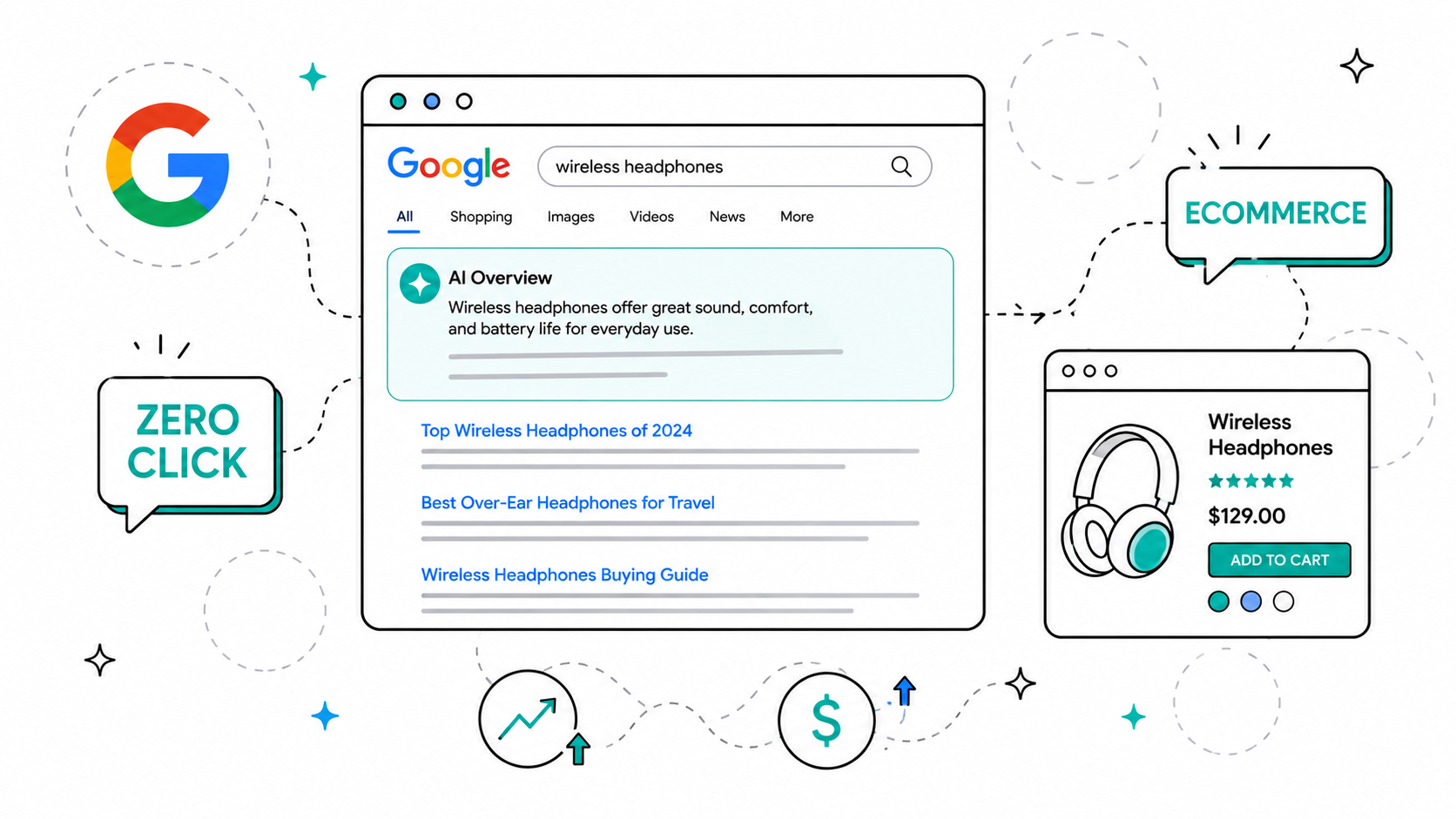
Zero-Click Shopping Is Here and It’s Changing E-Commerce Forever
For the last year+ I’ve talked to so many people including our clients about Zero-Click Marketing, specifically search, and how Google’s featured snippets, knowledge panels, and direct answers have reduced the need for users to click through to websites, over the years. If you were a marketer over the last 10 years, you have had to adapt your SEO and Content Marketing because you had to think about how your content appeared in Google’s own interface.
Now the same thing is happening to E-Commerce Marketers.
Google is enabling direct checkout within AI Mode in Search and the Gemini app. Users can complete purchases without ever leaving Google. Payment happens through Google Pay with PayPal integration coming soon. Retailers remain the merchant of record, but the transaction happens on Google’s turf.
Think about what this means. The product page visit, the add to cart flow, the checkout experience that e-commerce teams have spent years optimizing…all of that can now be bypassed.
Google becomes the storefront. Retailers become fulfillment centers.
This is the onebox moment for e-commerce. And just like content marketers had to figure out how to capture value when Google started answering queries directly, product marketers are going to have to figure out how to sell when the purchase happens inside search results.
Why This Puts Google Back in the Driver’s Seat Against OpenAI
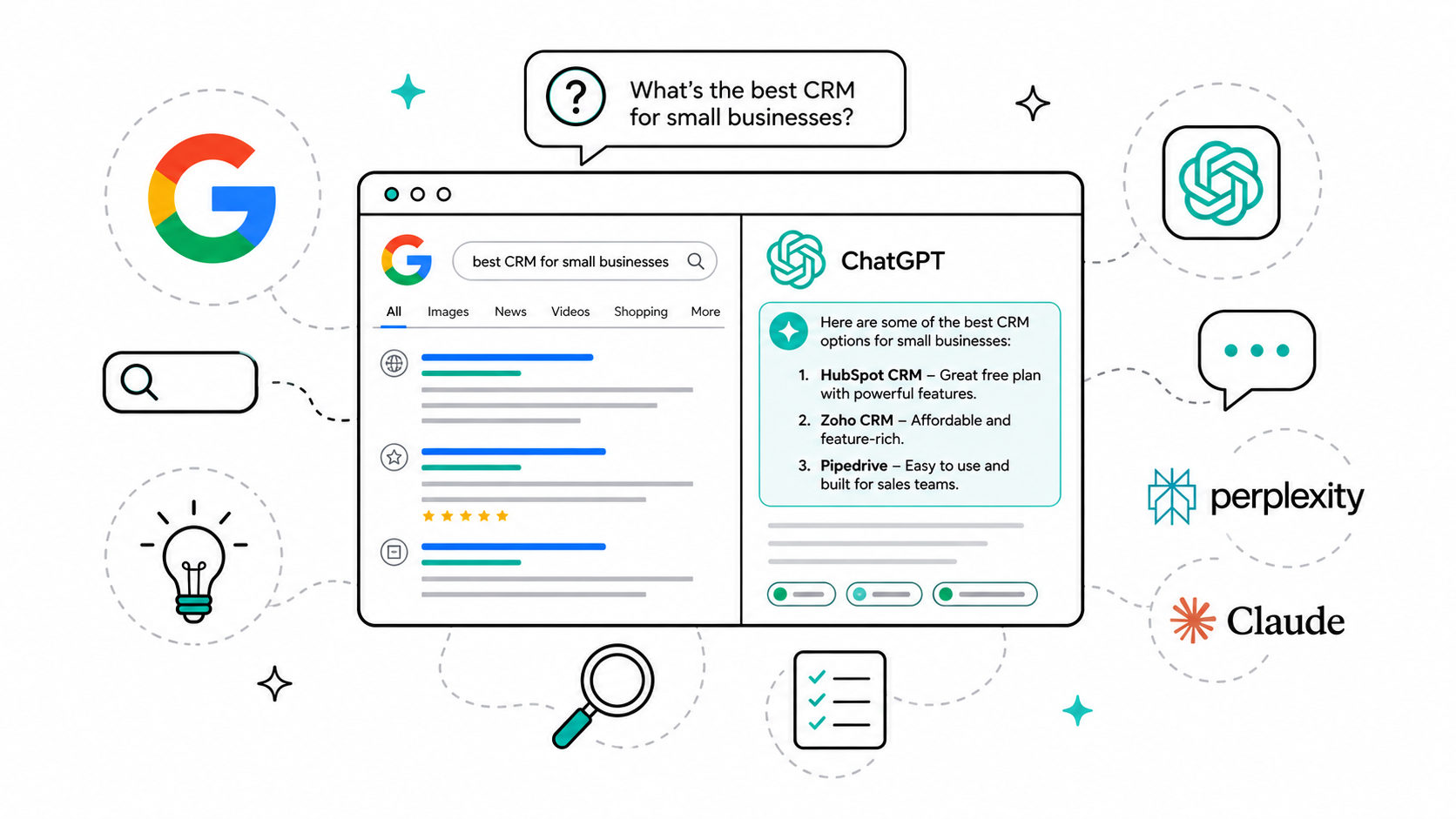
ChatGPT launched Instant Checkout in September. Microsoft announced Copilot Checkout days before Google’s reveal. So Google is just following the pack, right?
I don’t see it that way.
OpenAI and Microsoft have a fundamental problem. They don’t own the search landscape the way Google does. ChatGPT and Copilot are destinations people have to actively choose to visit. Google Search is where people already are. Over a billion shopping queries happen on Google every single day according to their own data.
Couple what we already know about Google’s Search dominance with the announcement this morning that Google Gemini will be powering Apple’s Foundational Models and AI capabilities.
This is distribution at it’s highest scale.
When Google enables checkout directly in search results, they’re not asking users to change behavior. They’re adding a transaction layer to behavior that already exists, which is a massive advantage.
Getting a bit more tactical and technical, there’s the merchant relationship angle. Google has been working with retailers through Merchant Center for years. They have the product feeds. They have the advertising relationships. They have the payment infrastructure. OpenAI is starting from ground-zero on all of this and they don’t have anywhere near the infrastructure.
And now Google has gotten the biggest names in retail to co-develop and endorse their commerce protocol. Shopify is integrating with everyone, sure. But Target, Walmart, Best Buy, Home Depot, and Macy’s all signed on to help build Google’s standard specifically. That’s a level of industry buy in that OpenAI simply doesn’t have.
My take: this announcement puts Google firmly back in control of the commerce search narrative. OpenAI made a splash with ChatGPT shopping features, but Google just reminded everyone who owns the distribution.
Direct Offers and Business Agent: New Ways to Reach Shoppers
Beyond UCP, Google announced two features that marketers should pay attention to.
Direct Offers is a new Google Ads pilot that lets advertisers present exclusive discounts to shoppers in AI Mode. When someone searches for a product using a conversational query, participating retailers can trigger special offers that appear as “Sponsored deals” when Google’s AI determines the shopper is ready to buy. Early partners include Petco, e.l.f. Cosmetics, Samsonite, and Rugs USA.
Business Agent puts AI chat directly into Search results for participating retailers. When users search for a brand, they see a “Chat” button that connects them to an AI assistant trained on that retailer’s products and policies. Launch partners include Lowe’s, Michaels, Poshmark, and Reebok. Retailers will eventually be able to train these agents on their own data and enable purchases within the chat.
Both of these represent new surfaces where brands can engage shoppers. And both require thinking differently about how you present your products and offers.
What This Means for Marketers and E-Commerce Brands
These announcements require a shift in how we think about e-commerce marketing.
Product data becomes your new SEO. Google’s new Merchant Center attributes go beyond keywords to include answers to common product questions, compatible accessories, and substitutes. Brands that invest in rich, conversational product data will be more discoverable in AI commerce. Those relying on basic feeds will get left behind.
Advertising is moving closer to the transaction. Direct Offers suggests a future where ads trigger purchases at the moment of decision. Performance marketers need to think about when their offers appear, not just where. The traditional funnel is compressing.
Checkout friction is now a competitive moat. Brands that integrate with UCP and enable frictionless AI checkout will capture sales that would otherwise go to competitors. If your checkout requires users to leave the AI interface while your competitor’s doesn’t, you’re at a disadvantage.
Customer relationships are at risk. When checkout happens on Google, retailers lose the final touchpoint. Cross selling, email capture, and relationship building moments that happen at checkout could disappear. My sense is that they won’t and you will still have an email and a phone number to maintain that relationship with your customer. But, you need to find new ways to maintain direct customer connections since the most they now know about your brand is a product they discovered or searched for on Google
You need a Zero-Click Commerce Strategy.
The time is now to think about how your products sell when the entire transaction happens inside Google. What information does the AI need to recommend your product? How do you differentiate when there’s no product page to optimize? (p.s. can I coin the ZCC acronym now?) The shift from search based commerce to agent based commerce is accelerating. The brands that figure out how to sell in this new environment will thrive. The ones that keep optimizing for a world where users click through to product pages may find themselves losing ground.
I’ll be writing more about practical strategies for adapting to these changes. But the first step is recognizing that this isn’t just a new feature announcement. It’s a fundamental shift in how e-commerce works online. Google just made sure they’re at the center of it and we’re already working with our clients daily to make sure they are ready for Agentic Commerce, get in touch with Visible Factors if you want to find out how we can help you get ahead of your competition!
About the Author: Tony Adam