There’s a version of the AEO conversation happening across SaaS marketing teams right now where AI search is changing everything, Answer Engine Optimization is a new discipline, and the old SEO playbook is dead. Your team needs to build a new function, hire new specialists, and rebuild your content for a different kind of crawler.
The data isn’t supporting that framing and I’m not buying in on that discussion.
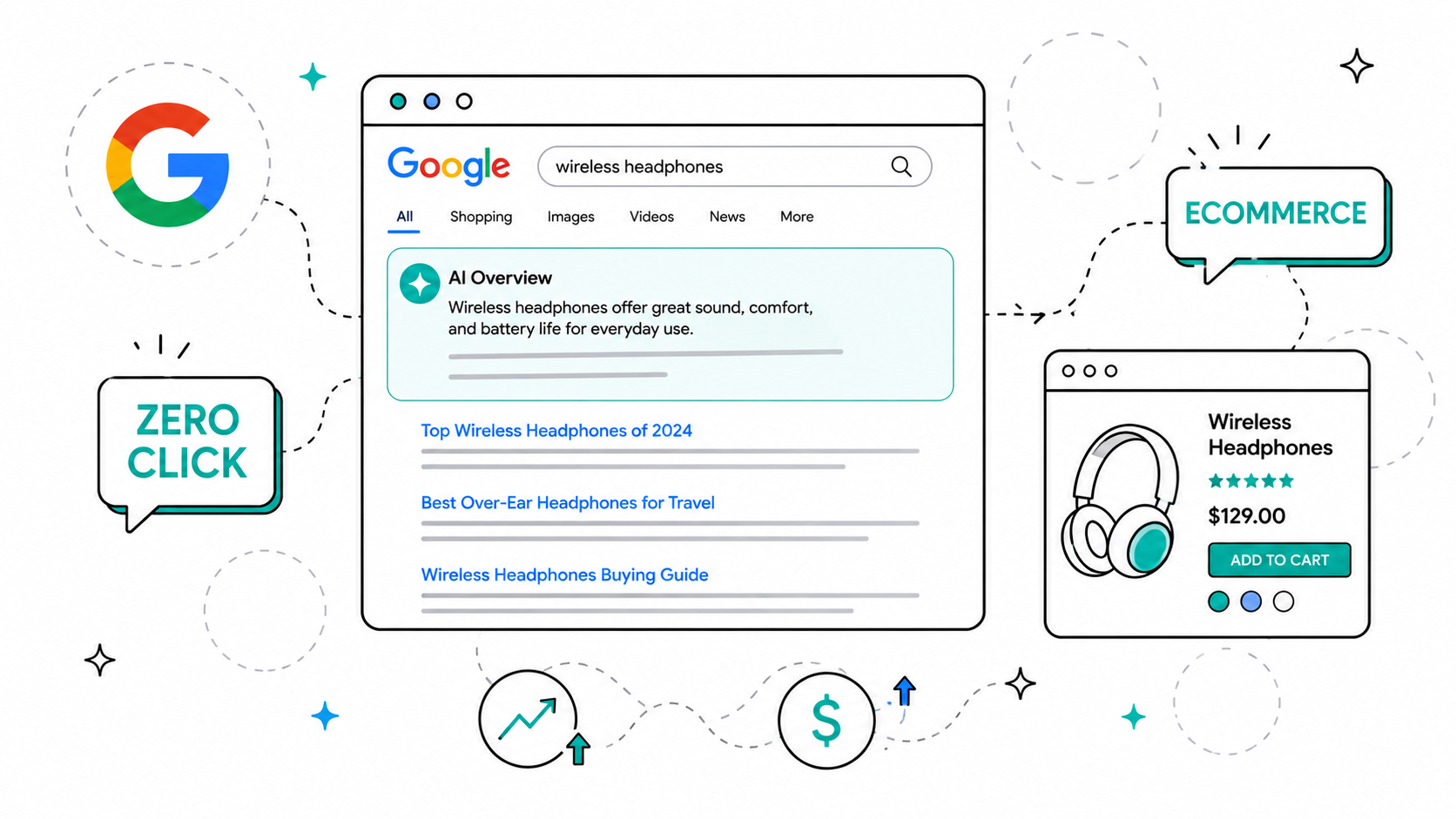
What we’re actually seeing in client work and across the SERPs we monitor is more boring and more useful. AEO isn’t a new discipline. It’s the same discipline that’s always worked, applied with sharper signals because the systems consuming the content now read it more literally than the old organic crawler ever did. The teams panicking about an entirely new playbook are mostly the teams that never invested in good content design in the first place. The teams that were already doing it well are getting cited in AI Overviews, ChatGPT and Perplexity without rewriting anything. That’s what our team has done and it’s been generating ecommerce revenue and B2B leads.
What Answer Engine Optimization asks for that SEO didn’t
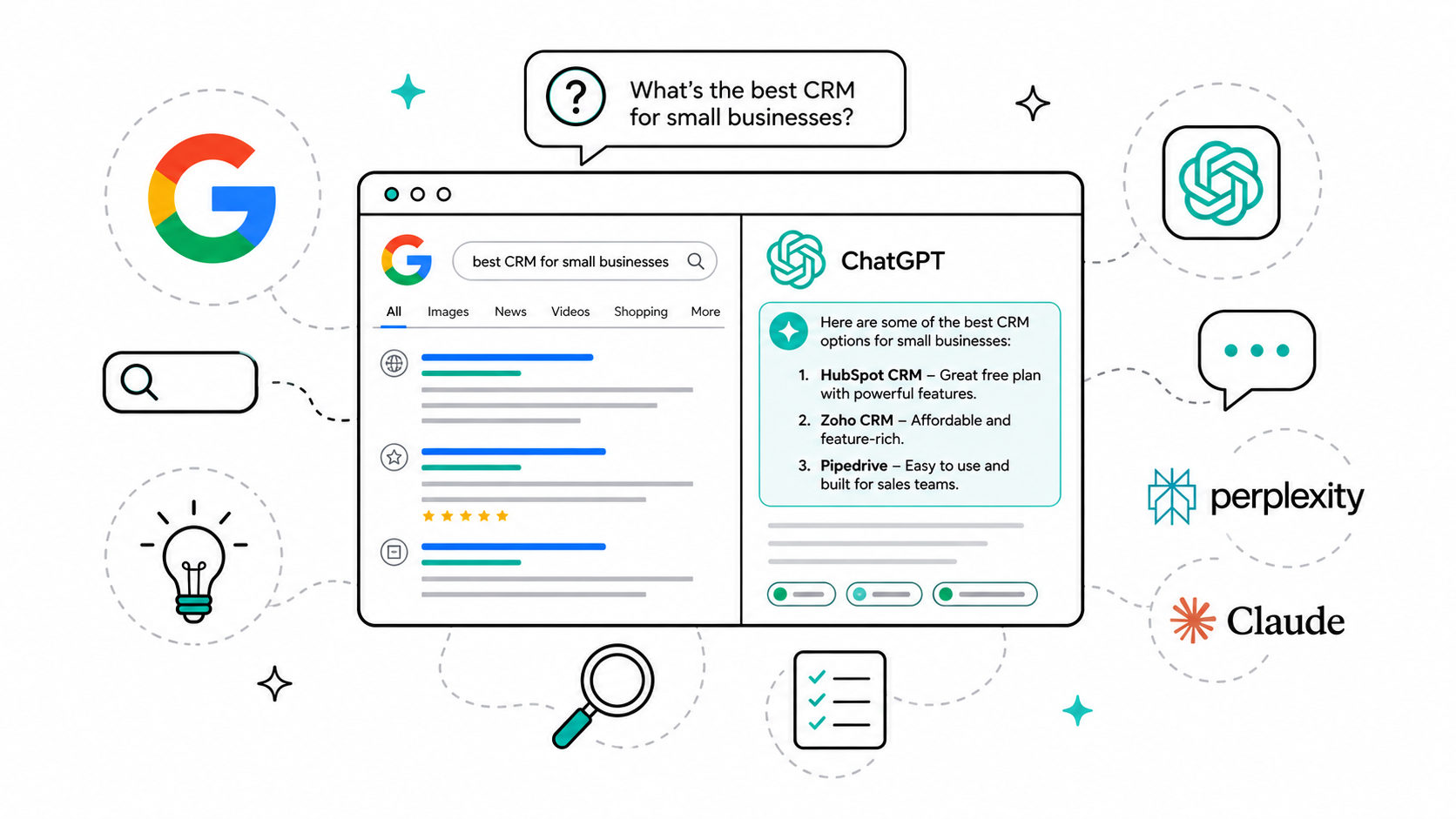
The short version is that answer engines extract content differently than the traditional SERP did. Traditional Google ranked pages, whereas answer engines pull passages. That changes what gets rewarded, but it doesn’t change the fundamentals.
A traditional SERP rewards a page that ranks for a query. The user clicks through, reads, and forms a judgment about whether the page answered the question. The page can be well-organized or poorly-organized, deep or shallow, well-cited or unsourced. As long as the ranking signals point to it, traffic flows.
An answer engine rewards passages that answer questions directly, with clear entity references, in a structure the system can parse. The passage has to stand on its own. It has to be specific enough to be useful when lifted out of context. It has to read as authoritative without the rest of the page propping it up. The page still needs to rank, but the unit of value is smaller and more literal.
That’s the entire difference. AEO isn’t a new discipline in addition to SEO. It’s the same content principles you had with SEO with the added discipline of writing for passages, not just for pages.
The four signals AEO actually wants
When we look at the content getting cited in AI Overviews and pulled into LLM responses, some of the same principles overlap. They don’t require a new skillset, just a little different and maybe better execution of skills the SEO function already has.
Direct answers in the first sentence of a section. Answer engines pull the cleanest self-contained answer near the top of a section, usually a tight block of a sentence or two rather than a single hand-picked line. Content that buries the answer three paragraphs in gets passed over. Content that opens a section with a clean, declarative sentence that answers the section’s question gets pulled. This is the same advice good editors have given content writers for twenty years. The system has now made it a ranking input.
Specific entities, specific numbers, specific named tools and frameworks. Vague content doesn’t get cited. “Many teams struggle with attribution” doesn’t get pulled. “Triple Whale, Northbeam, and Rockerbox each handle modeled conversions differently” does. The system rewards specificity because specificity is the signal that the content has substance. Generic content reads as filler to a passage extractor, the same way it reads as filler to a careful reader.
Header structures that match the way real people ask questions. Answer engines match queries to passages by meaning, and they often break a single query into related sub-questions before they go looking, so the matching happens semantically rather than by literal pattern. Headers that read like questions or that mirror the way a search query is phrased get matched. Headers that read like content marketing categories don’t. The fix isn’t a new framework. It’s writing headers that sound like questions a customer would actually ask, then answering them directly in the section beneath.
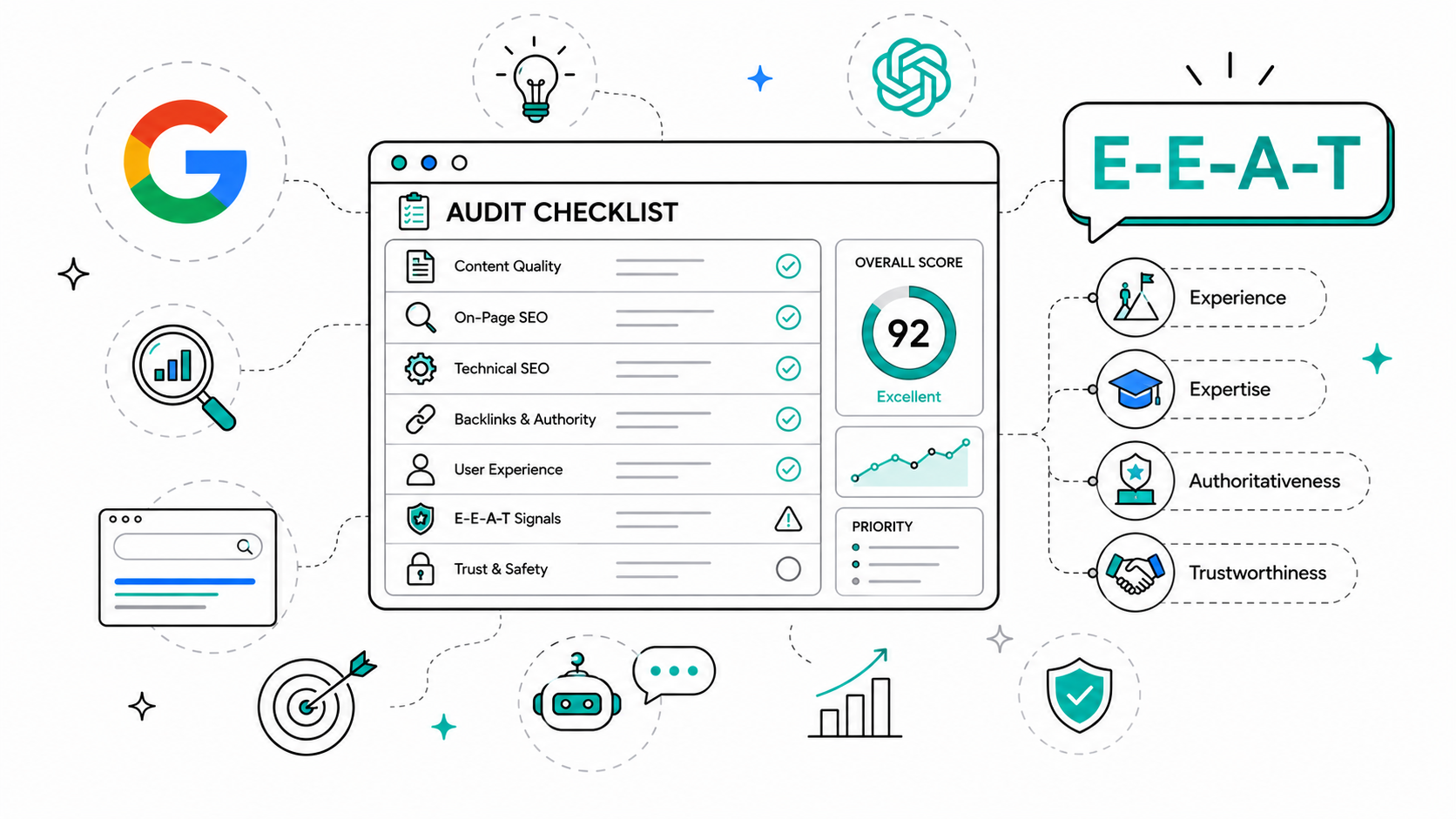
On-page authority signals that the system can verify. Named authors with verifiable expertise. Citations to credible sources. Original data with stated methodology. Clear statements about who wrote the content and what they know. These are the same E-E-A-T inputs that have mattered for years. Answer engines weight them more heavily because they’re choosing whose words to put in a synthesized answer, and they need a basis for trusting the source.
That’s the list. Nothing in it requires a new specialist. Nothing in it requires a rebuild. It requires writing more carefully, with sharper structure, with more specificity, and with clearer authority signals.
One honest caveat before the editorial fixes. Not all of this lives on the page. A large part of whether an engine trusts your content comes from off-site corroboration, meaning whether your brand and your authors get mentioned and cited across other credible sites. An entity that shows up consistently across independent sources reads as more authoritative, and that off-site signal is at least as strong as anything you can do on the page. An editor can’t manufacture it. It comes from doing work worth referencing and earning the mentions over time. The on-page discipline is what you control directly, so it’s where the rest of this piece stays, but the off-site half is real and worth naming.
Where the “AEO is a new discipline” framing breaks down
Two things happen when teams treat AEO as a brand-new function.
The first is that they hire specialists or buy tooling for a problem that’s mostly editorial. The AEO consultant arrives, the audit gets run, the recommendations come back, and most of the recommendations are versions of “write clearer headers” and “answer the question in the first sentence.” Things the existing content team could have done if anyone had asked them to.
The second is that they rebuild content under a new framework while leaving the underlying weaknesses intact. The pages get restructured. The headers get rewritten. The bios get added. But the content itself is still generic, still light on specifics, still written by generalists who don’t have a point of view in the category. The structure improves and the substance doesn’t. The pages don’t get cited.
This is the trap. AEO is being marketed as a discipline because there’s a market for selling it as one. The actual work is editorial discipline applied with new awareness of how the systems consume the content. Teams that have invested in serious editorial standards over the last several years are already most of the way there. Teams that have leaned on volume-driven content programs are the ones who feel the gap.
What does good AEO content actually look like?
A SaaS comparison page is a useful example because it’s where the gap shows up most clearly.
The version that ranks but doesn’t get cited looks like this. A long introduction about why comparison matters. Three competitors covered in roughly equal detail. Headers like “Tool A overview” and “Tool B features.” Generic descriptions that read like a feature list scraped from the vendor’s site. A conclusion that hedges.
The version that ranks and gets cited looks different in ways that have nothing to do with AEO as a discipline. The introduction is two sentences and gets to the point. Headers read like questions a buyer would actually ask. “When does Tool A make more sense than Tool B?” “What’s the pricing difference at the relevant scale?” “Which one is easier to integrate with [specific stack]?” Each section opens with a one-sentence answer. The body backs it up with specifics. The author is named, has verifiable category expertise, and the page includes a statement about how the comparison was done.
Nothing about that second version requires AEO tooling or a new specialist. It requires an editor who has read the rater guidelines, an author who actually knows the category, and a structure that prioritizes utility over content length. The system pulls from it because it’s pullable. The structure makes the substance legible.
Where SEO investment should go right now
The practical implication for SaaS marketing teams investing in content programs is that the AEO panic isn’t the right framing. The right framing is that the bar on content quality has gone up, and the systems consuming the content can now detect quality more reliably than they used to.
Three investments compound under the new conditions.
The first is editorial depth on fewer pages. The systems reward specificity and authority, and both come from spending more time on each piece. The teams shipping forty thin articles a month are losing ground to teams shipping eight strong ones. This isn’t new advice. It’s the same advice that’s worked since the helpful content update, applied with the new awareness that the systems can now detect the gap more reliably.
The second is structural discipline at the section level. Every section should open with a direct answer to a specific question. Every header should sound like a question someone would actually ask. Every claim should be specific enough to be useful. This is editorial work, and it’s the work that produces content the system can pull from.
The third is the same E-E-A-T investments that have always mattered. Named authors with real category expertise. Citations to credible sources. Original data where you can produce it. Trust signals that read as substantive. These are unchanged from a year ago, two years ago, five years ago. The weight on them has gone up.
The bottom line
AEO isn’t a new discipline. It’s good SEO content design with sharper signals, applied with awareness of how the systems consume the content. The teams that were already writing carefully, structuring deliberately, and investing in real authority are getting cited. The teams that need to rebuild for AEO are mostly teams that needed to fix their content quality regardless.
The right move isn’t to hire AEO specialists or buy AEO tooling. It’s to take the editorial standards that have always worked and run them with more discipline, knowing the systems now reward the discipline more visibly than they used to. That’s the entire shift. Treating it as anything more is mostly marketing.
If you want an outside read on whether your content clears that bar, a marketing audit is a straightforward place to start.
Answer Engine Optimization FAQs
What is answer engine optimization?
Answer engine optimization is the practice of structuring content so AI search features like AI Overviews, ChatGPT, and Perplexity can pull it straight into their answers. It rewards clear passages that answer a question on their own and cite credible sources, which is the same content quality that has always worked, just with sharper structure.
How is AEO different from SEO?
Mostly it isn’t. SEO gets your page ranking, which is still the prerequisite for being cited, and AEO focuses on whether a specific passage on that page is clean and specific enough to be lifted into an AI answer. The unit of value shrinks from the page to the passage, but the signals underneath are the same.
Is AEO the same as generative engine optimization?
They overlap enough that people use the terms interchangeably. AEO usually means getting cited in answer features like AI Overviews and featured snippets, while generative engine optimization is the broader label for visibility across generative engines like ChatGPT and Gemini. The actual work is nearly identical, so the label matters less than the execution.
Does my content still need to rank to get cited in AI Overviews?
Mostly yes. Ahrefs found a clear correlation between organic ranking and AI Overview citation, so pages that already rank are far more likely to get pulled. Query fan-out means a page ranking for a related question can also surface, but earning a strong ranking somewhere still does most of the work.
Do I still need FAQ schema for AEO?
Not for the rich result. Google deprecated FAQ rich results in May 2026, so FAQPage markup no longer produces the dropdown under your listing. The FAQ content itself still helps, because question headers with direct answers are exactly what AI answers and featured snippets pull from, so keep the content and treat the schema as optional.
About the Author: Grace Wong